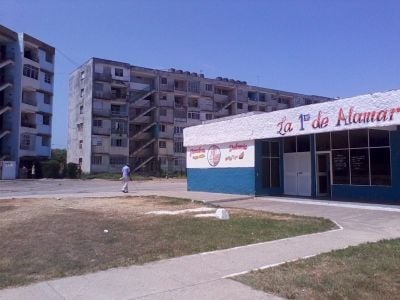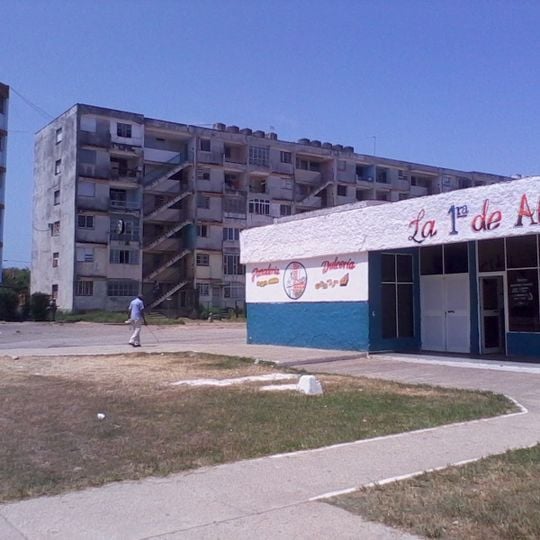
Alamar, Soviet-style residential district in Habana del Este, Cuba.
Alamar is a residential district in Habana del Este made up of standardized walk-up apartments ranging from five to six stories, built using modern construction methods. The structures follow a practical layout with schools, shops, and recreation areas integrated within easy walking distance of homes.
Alamar grew out of the 1950s suburban plan for eastern Havana: on 7 March 1956 the Guanabacoa council approved the Alamar El Olimpo section for Guillermo Alamilla Gutiérrez's Residencial Alamar S.A., followed on 26 June 1957 by Costa Azul de Alamar. The land had belonged to the Velazco family's La Noria estate. Plots sold for 6 to 15 pesos per square vara, and the Batey de Alamilla stood where the Hanoi park is now.
Alamar's name comes from Guillermo Alamilla Gutiérrez, the ophthalmologist who promoted its first urbanisation, joining the first syllables of his surname and of the name Margarita or María. Since 1995 the district has hosted Cuba's first annual rap festival, and its frequent peñas make it the stronghold of Cuban hip-hop.
The neighborhood is accessible by public transport, and the layout is designed for walking with short routes to daily essentials and community spaces. Visiting during daytime hours allows you to observe daily life and connect with what residents use in their surroundings.
The Organoponico Vivero Alamar is a 10-hectare urban farm growing organic vegetables and medicinal plants within the neighborhood. Elderly residents work there, making it a living connection between younger and older generations.
The community of curious travelers
AroundUs brings together thousands of curated places, local tips, and hidden gems, enriched daily by 94,047 contributors worldwide.