Castillo de San Pedro de la Roca, Spanish colonial fortress in Santiago de Cuba, Cuba.
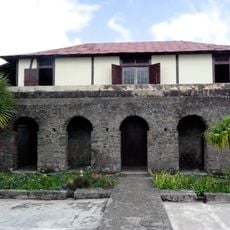
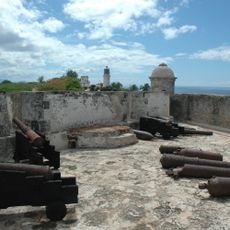
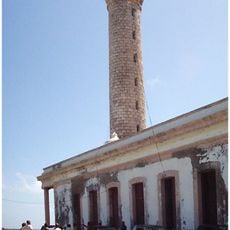
The military installation spans several stone terraces with defensive walls, bastions, and artillery emplacements connected by staircases and ramps, positioned on a coastal promontory overlooking Santiago de Cuba Bay.
A ravelin and battery stood here from 1590 to 1610; the larger fort was designed in the early 1600s by Battista Antonelli, a Milanese military engineer, for governor Pedro de la Roca de Borja. Construction of the citadel began in 1638 and finished in 1700, interrupted when English freebooters under Christopher Myngs took Santiago in 1662 and by earthquakes. From 1775 la Roca and la Estrella served as a political prison.
Locals call it Castillo del Morro after the rocky promontory, the morro, on which it stands. Its silhouette from above resembles a spearhead pointing out to sea, the result of medieval and Renaissance codes layered across staggered terraces. The Spanish Crown had it built to guard Santiago de Cuba from naval attack, and it is often compared with the similar Fuerte San Felipe del Morro in San Juan, Puerto Rico.
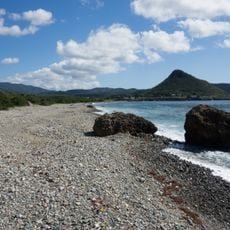
Visitors reach the installation via a steep road from Santiago de Cuba, with guided tours through the four main levels available. Upper terraces provide views of the bay and surrounding coastal landscape during daylight hours.
The installation contains a warehouse carved directly into the rock face, permitting supplies to arrive by sea during historical sieges without passing through upper defensive levels.
The community of curious travelers
AroundUs brings together thousands of curated places, local tips, and hidden gems, enriched daily by 93,951 contributors worldwide.