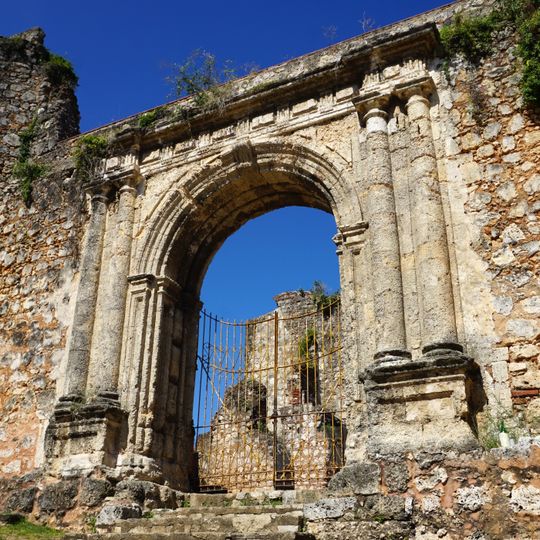
Monasterio de San Francisco, Colonial monastery ruins in Colonial City, Dominican Republic
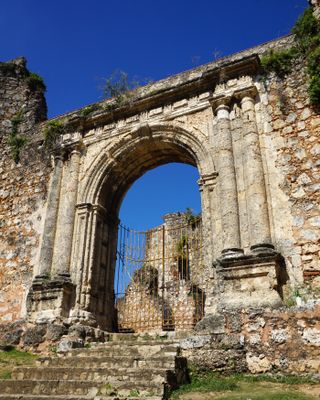
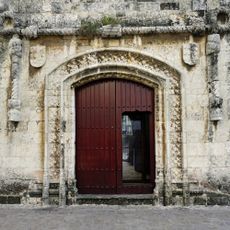
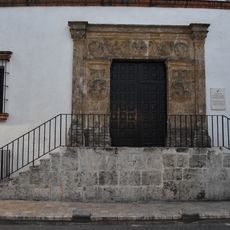
The Monasterio de San Francisco in Santo Domingo is a freestanding stone archway, weathered tan-grey, with a rounded opening framed by carved mouldings. Fluted pilasters on square bases stand to each side, supporting a horizontal frieze and broken cornice. A rusted iron gate with vertical bars and a curved top closes the passage, and low stone steps lead up to the threshold, with moss growing from the ledges.
Founded in 1508, it was the first Franciscan monastery in the New World and survived pirate raids, earthquakes, and multiple episodes of destruction over centuries. The structure was repeatedly damaged and partially rebuilt, ultimately becoming the ruin visitors see today.
The grounds around the ruins host dance performances, concerts, and art exhibitions that draw locals and visitors throughout the year. It remains an active space where the city's cultural life unfolds against the backdrop of these colonial walls.
The site is freely accessible during daylight hours, and local guides offer detailed tours of the ruins. Sturdy footwear is recommended, as the ground is uneven with scattered stone debris.
Alonso de Ojeda, successor to governor Nicolás de Ovando, was buried at the monastery's main entrance; his remains were found in 1892 and moved to the Dominican Convent on 12 October 1942. The remains of Bartholomew Columbus, brother of Christopher, were also found here.
The community of curious travelers
AroundUs brings together thousands of curated places, local tips, and hidden gems, enriched daily by 93,788 contributors worldwide.