St. Lucie Village Historic District, Historic district in St. Lucie Village, Florida.
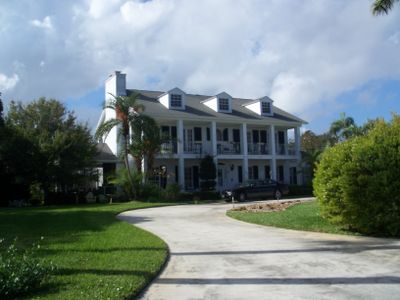
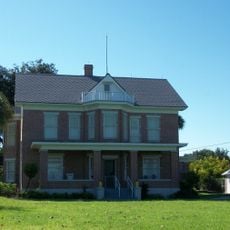
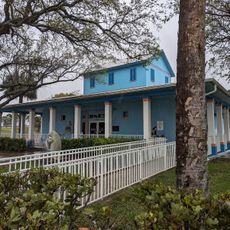
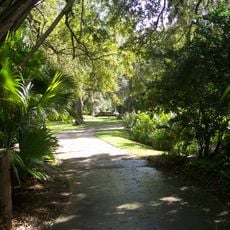
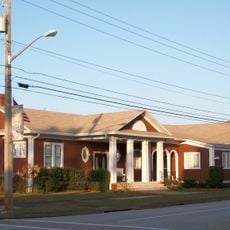
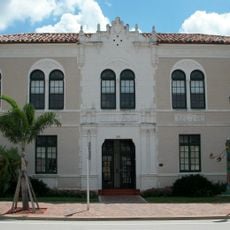
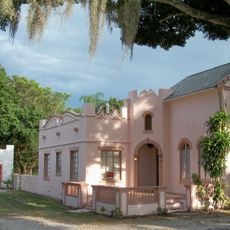
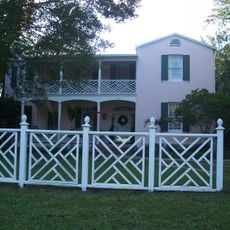
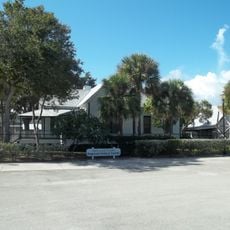
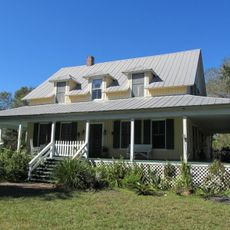
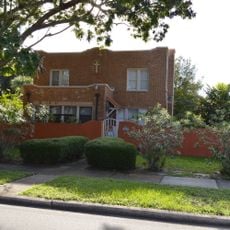
St. Lucie Village Historic District is a residential area in Florida containing about 35 buildings spread along North Indian River Drive, featuring construction styles ranging from simple wooden frames to Late Victorian designs. The area maintains its original street pattern and primarily residential character, with structures distributed across several miles.
Fort Capron, built in the 1850s to support the Third Seminole War, housed soldiers and preceded the village that grew after the Armed Occupation Act. The district was added to the National Register of Historic Places on December 1, 1989, recognizing 35 contributing structures along North Indian River Drive.
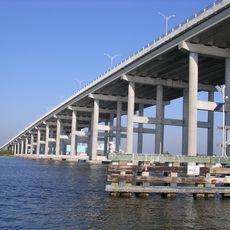
Chamberlin Boulevard, the east-west street, is named for Mrs. Hattie Chamberlin of Kansas City, Missouri, who planted a row of Washingtonia palms in its median during the Florida land boom of the 1920s. The street was meant to carry the entrance to a bridge across the Indian River, but the bridge was destroyed by the Hurricane of 1928 while under construction.
The district spreads along North Indian River Drive over a considerable distance, making it helpful to drive or plan for longer walks to see the various buildings. The original street layout makes navigation straightforward, though the scattered placement of structures means you may want to focus on specific sections rather than trying to see everything at once.
Chamberlin Boulevard was named for Mrs. Hattie Chamberlin of Kansas City, Missouri, who planted a row of Washingtonia palms in the street's median during the Florida land boom of the 1920s. The east-west thoroughfare was meant to carry the approach to a bridge across the Indian River, but the bridge was destroyed by the Hurricane of 1928 while still under construction.
The community of curious travelers
AroundUs brings together thousands of curated places, local tips, and hidden gems, enriched daily by 94,418 contributors worldwide.