Fort Barrington, Colonial fort in McIntosh County, United States.
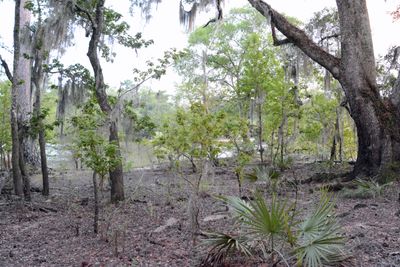
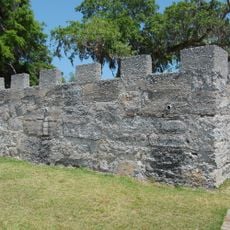
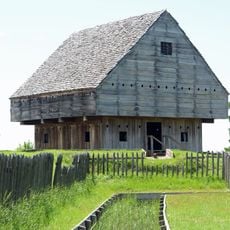
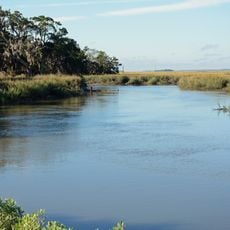
Fort Barrington was a square stockaded fort about 75 feet each way, with a central blockhouse, barracks, a well, a storeroom and a magazine. Its bastions stood at the eastern and southern corners, the latter at the river's edge, joined by ramparts running roughly 150 yards. Today only sand breastworks and two bastions remain beside the sandy road to the hunting and fishing club.
The fort was established in 1751 under Lieutenant Robert Baillie's command as a critical defense point against Spanish forces from Florida. It played a key role in the region's early colonial conflicts.
The name honours Josiah Barrington, a friend of Lieutenant Robert Baillie and a relative of James Oglethorpe. The site later became Fort Howe, and the surrounding sand hills had long served as a Native American trail and the main coastal route from Savannah to St. Augustine.
The site sits on private hunting club property and requires advance permission from landowners before visiting. Contact local historical societies or the county to ask about access conditions and the best time to visit.
No archaeological work beyond ground reconnaissance has been done at Fort Barrington, so the sand breastworks and two bastions visible left of the sandy road to the club are the original earthworks, not reconstructions. The site entered the National Register of Historic Places on September 27, 1972.
The community of curious travelers
AroundUs brings together thousands of curated places, local tips, and hidden gems, enriched daily by 92,678 contributors worldwide.