King Archaeological Site, Archaeological settlement from 16th century on Coosa River in Floyd County, Georgia, US.
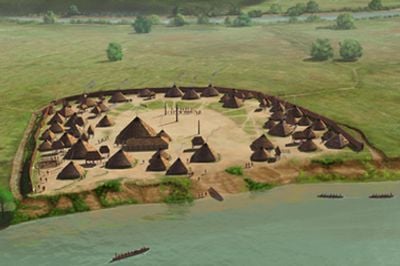
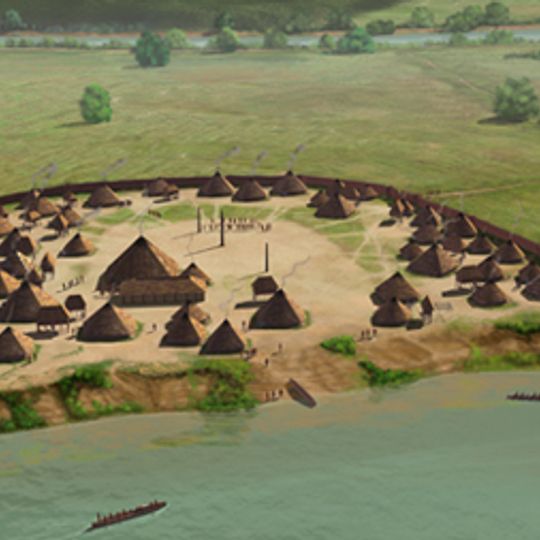
King Archaeological Site is a 5-acre settlement with residential buildings, storage structures, and a central plaza ringed by defensive ditches and wooden walls. The layout includes carefully positioned living spaces such as semi-subterranean winter houses with peaked wooden roofs and lighter raised summer buildings used for storage and daily tasks.
The settlement developed during a period when Spanish expeditions were moving through the region, with evidence of contacts during Hernando de Soto's travels around 1540 and Tristan de Luna's journey approximately two decades later. This overlap shows how the community faced major disruptions in their world.
The central plaza served as the community's gathering place where important meetings took place and where people honored their dead according to their own beliefs. These burial practices reveal how residents understood kinship and their role within the group.
The site is best explored by starting at the central plaza and then viewing the surrounding residential areas to understand how people organized the space. The visible ditches and building foundations provide good clues about the original layout, even though only portions have been excavated.
Excavations uncovered European objects like iron tools and a sword in certain burials, suggesting early direct exchange between the community and Spanish expeditions. These finds are remarkable and provide rare archaeological evidence of these encounters.
The community of curious travelers
AroundUs brings together thousands of curated places, local tips, and hidden gems, enriched daily by 92,594 contributors worldwide.