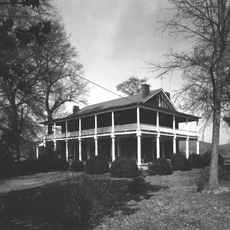
William S. Simmons Plantation, Greek Revival plantation in Cave Spring, United States
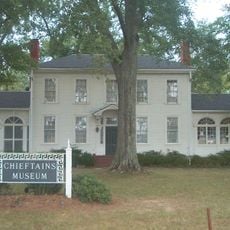
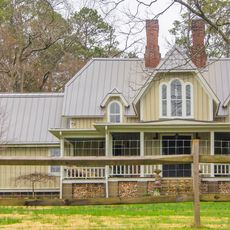
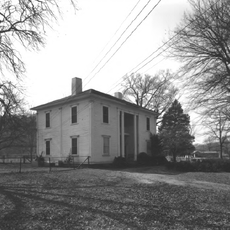
William S. Simmons Plantation is a two-story Greek Revival residence built with handmade brick and extremely thick walls throughout. The layout follows a central hall plan with four matching rooms on each floor, eight fireplaces, and heart pine flooring in all spaces.
The house was built in the 1840s before the American Civil War and added to the National Register of Historic Places in 1980. This designation recognized the historical value of the structure from that important period in United States history.
The interior walls display hand-painted decorations from the mid-1800s in shades of blue, lavender, burgundy, and gold leaf, particularly in the main room. These finishes show how the family living here wanted to present themselves and what they valued in their home.
The property shows how houses were built with exceptional durability in mind, visible in the thick walls and solid construction methods. Walking through the rooms gives you a clear sense of how daily life worked in this period.
A separate brick building on the grounds called Cherokee Kitchen once housed David Vann, a Cherokee sub-chief and treasurer of the Cherokee Nation. This connection reveals a complex local history often overlooked in typical plantation narratives.
The community of curious travelers
AroundUs brings together thousands of curated places, local tips, and hidden gems, enriched daily by 92,099 contributors worldwide.