Augusta Canal, Industrial waterway in Augusta, United States.
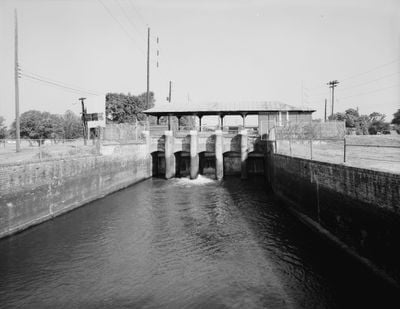
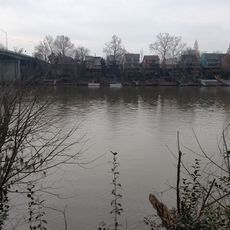
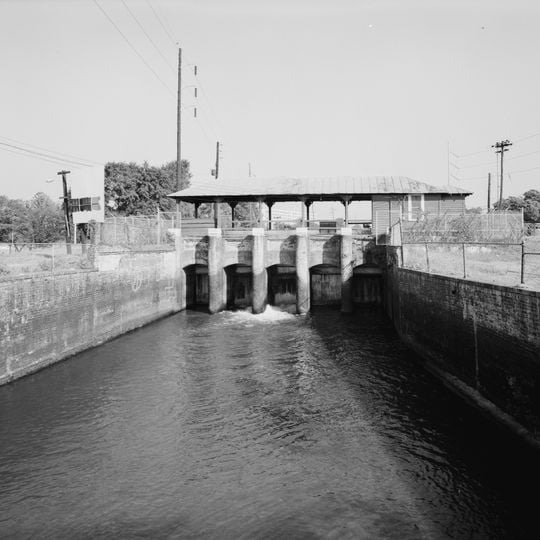
The Augusta Canal is a 13-mile (21 km) waterway fed by the Savannah River, running through three levels in suburban and urban Augusta before the water returns to the river at various points. It was built to use the fall line of the Savannah to drive mills, carry goods and supply the city with water. The first level's 7-mile towpath now anchors a trail system.
The Augusta Canal was completed in 1845 to supply water, power and transport, with the Canal Commission headed by Henry Harford Cumming, who paid railroad engineer John Edgar Thomson for the first survey. A saw and gristmill went up in 1847 at the site of today's Enterprise Mill, followed by the four-story Augusta Manufacturing Company textile plant. By the Civil War the canal had helped make Augusta a Confederate manufacturing centre, and it was enlarged in 1875.
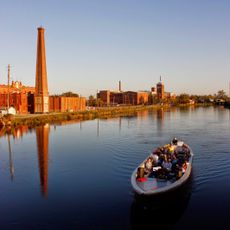
The canal's name comes from Augusta, and its mill villages drew farm families, including women and children, to factory work. Enterprise and Sutherland mills now hold offices and loft apartments, while the Discovery Center in Enterprise Mill runs exhibits and guided tours. Petersburg boats modelled on old cotton cargo vessels carry tour groups on the water.
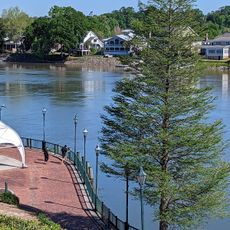
The canal's first level has a 7-mile towpath that connects to the River Levee Trail, Third Level Trail, and a SORBA single-track mountain bike trail. Guided tours run on electric Petersburg boats inspired by historic cargo vessels. The canal remains a source of drinking water, so access to the water itself is limited.
This waterway remains the only functioning industrial canal in the United States that has continuously served its original purpose of power generation and water supply since its creation. This dual function makes it a rare example of continuity in American industrial infrastructure.
The community of curious travelers
AroundUs brings together thousands of curated places, local tips, and hidden gems, enriched daily by 92,723 contributors worldwide.