Carver Village Historic District, Historic residential district in Savannah, United States.
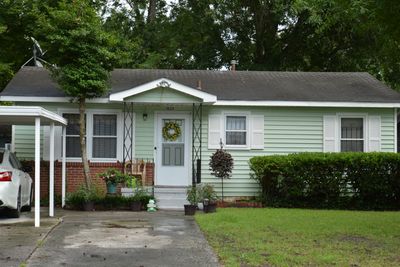
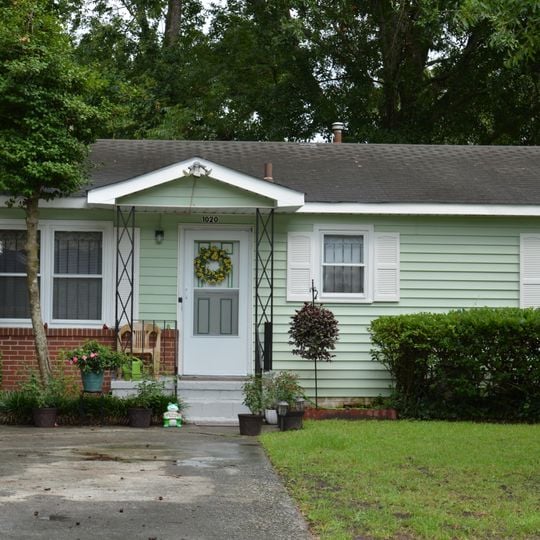
Carver Village Historic District is a residential district in Savannah, Georgia, bounded by W. Gwinnett and Endley Streets and Allen Blun and Collat Avenues. It holds roughly 600 houses, churches and other buildings, most of them mid-20th-century housing built for African Americans, including military service members and veterans.
The neighborhood was established in 1948 to provide housing for African American military members and veterans during the era of residential segregation in Savannah. This founding represented an important moment when a separate community was created for a group that had faced housing restrictions in other areas of the city.
The name honours George Washington Carver, the agricultural scientist. The Historic Carver Village Neighborhood Center at 905 Collat Avenue hosted the 2016 reception marking the district's pending National Register nomination, and it still serves as a community gathering place for residents.
The district lies in western Savannah, bounded by West Gwinnett and Endley Streets and Allen Blun and Collat Avenues. The Historic Carver Village Neighborhood Center at 905 Collat Avenue served as the venue for the 2016 reception marking the pending National Register nomination. Streets are laid out on a grid, so a walking route can follow Collat Avenue as a spine.
In 1956 the U.S. Army released 330,000 live mosquitoes over Carver Village in Operation Big Buzz, a secret test of whether insects could carry biological weapons. The neighborhood's pending National Register nomination was celebrated in 2016 at a reception at the Historic Carver Village Neighborhood Center, 905 Collat Avenue.
The community of curious travelers
AroundUs brings together thousands of curated places, local tips, and hidden gems, enriched daily by 93,037 contributors worldwide.