West Point Rice Mill, Historic rice mill in Charleston, United States
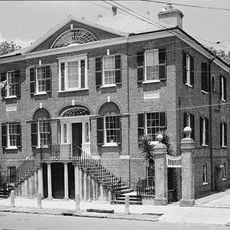
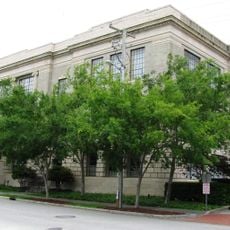
West Point Rice Mill is a three-and-a-half-story Flemish bond brick building, 142 ft (43 m) long and 42 ft (13 m) wide, with a gabled roof. Its west elevation has eleven bays, the central three projecting slightly, framed by stuccoed Doric pilasters in a Palladian arrangement. Two-story wings, 36 ft (11 m) by 26 ft (8 m), extend from the outer bays of the east elevation.
Jonathan Lucas III built a steam-powered rice mill on the Ashley River in 1840; it burned on November 20, 1860. The replacement mill, begun at once despite the Union blockade, was fully operating by late 1863. In 1890 Charleston's three mills produced over 97,000 barrels of rice, but competition and hurricanes cut output; West Point Mill closed in 1920.
The mill's name comes from its position on West Point, the tip of the Charleston peninsula where the Ashley and Cooper rivers meet. Visitors can still see the iron earthquake bolts added after the 1886 quake, and the building now houses offices and restaurants at the City Marina.
The building sits at Lockwood Drive next to Charleston's City Marina and is easy to reach from the waterfront area. After renovations in the 1990s, the interior now holds offices and restaurants, so you can explore the exterior and surroundings, but the inside serves commercial tenants rather than public exhibition space.
The mill's steam engine was sold around 1925 to the Henry Ford Museum, and the property passed to the City of Charleston in 1926. In 1937 the Works Progress Administration began converting the building into the James F. Byrnes air terminal, with Pan American World Airways hiring Delano and Aldrich to plan the passenger station; the transatlantic service was abandoned when war began in Europe.
The community of curious travelers
AroundUs brings together thousands of curated places, local tips, and hidden gems, enriched daily by 93,676 contributors worldwide.