James Nicholson House, historic house in South Carolina, United States
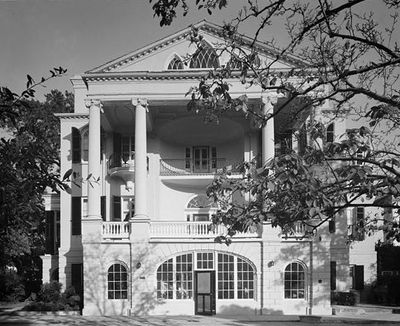
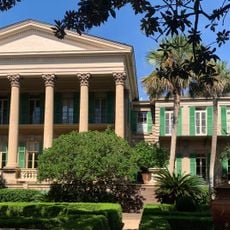
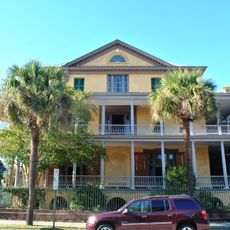
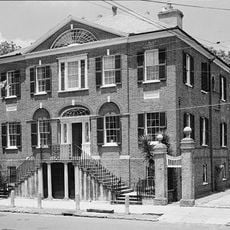
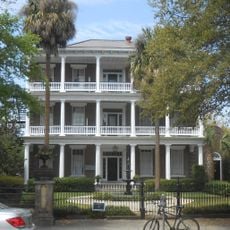
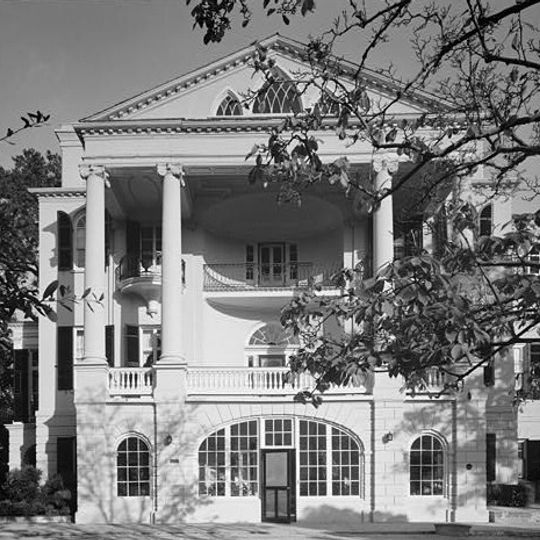
The James Nicholson House is a single-family home in Charleston, South Carolina, built around 1816 in the Classical Revival style and listed on the National Register of Historic Places. The building features white stuccoed brick walls on a high rough stone basement, two main floors, and a front portico supported by four large Ionic columns with Renaissance capitals, while the roof displays a triangular pediment with decorative dentil molding and Gothic triptych windows.
The house was built around 1816 in the Classical Revival style, a period when wealthy Charlestonians favored this architectural approach, and initially served as a private residence for various prominent families. Later, in 1909, it was transformed into Ashley Hall, a girls' preparatory school, shifting its role from a private dwelling to an educational institution.
The house takes its name from James Nicholson, who owned it from 1829 to 1838, yet the classical columns and white stucco facade reflect the taste of wealthy Charlestonians in the early 1800s. It later became Ashley Hall, a girls' preparatory school, and continues to shape the cultural landscape of the city as a symbol of education and community presence.
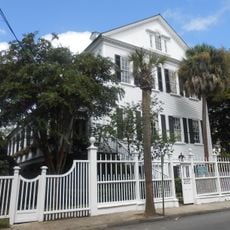
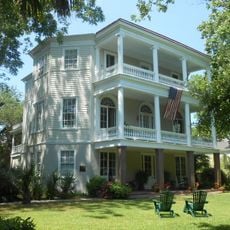
The house can only be viewed from the outside since it remains in private ownership and is not open to the public. The stately facade with its classical columns and details is nevertheless clearly visible from the street and offers a visual impression of early Charleston architecture.
The building was home to two remarkable Charleston figures: James Pringle, an important political representative of the Union during the Nullification crisis, and George A. Trenholm, a wealthy merchant who later served as Secretary of the Confederate Treasury. These residents reflect the city's deep involvement in the political upheaval of the 1800s.
The community of curious travelers
AroundUs brings together thousands of curated places, local tips, and hidden gems, enriched daily by 91,052 contributors worldwide.