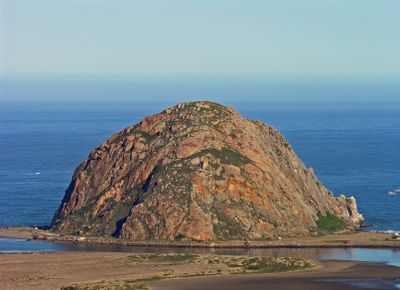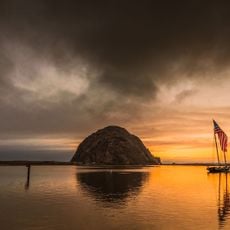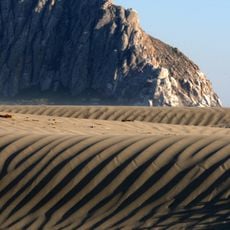
Morro Rock, Volcanic plug in Morro Bay, California, US
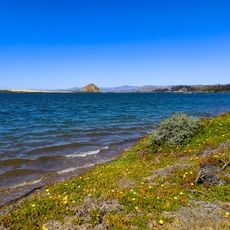
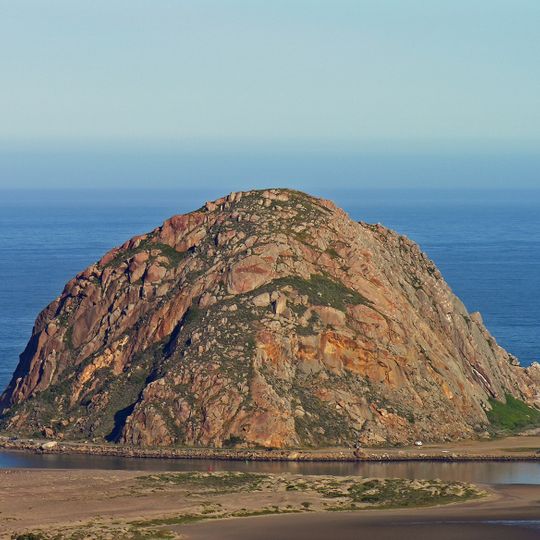
Morro Rock is a 581-foot (177-meter) volcanic plug at the entrance to Morro Bay harbor, connected to the mainland by a constructed causeway. The rock rises steeply from the Pacific and forms a recognizable silhouette along the central California coast.
Morro Rock was probably sighted by Spanish maritime explorers as early as 1542 under Juan Rodríguez Cabrillo, though no mapping is recorded. The name comes from the Portolá expedition, which camped near Morro Bay on September 8, 1769; friar Juan Crespí wrote of "a great rock in the form of a round mountain" (morro). The rock was quarried on and off from 1889 to 1969, supplying the Morro Bay breakwater and Port San Luis Harbor works, and became California Historical Landmark 821 in 1968.
The Salinan name for the rock is Le'samo, the Chumash name Lisamu; both tribes regard it as sacred. The Salinan hold biannual solstice ceremonies there, recounting how a hawk and a raven defeated the two-headed serpent Taliyekatapelta at the rock's base. Their right to climb for these ceremonies is established, though the local Chumash dispute it and hold that the rock should never be climbed; general climbing is illegal.
Visitors drive along Coleman Drive from the Embarcadero to reach the base, where two beach parking areas provide access. The viewpoints work well for photos and bird watching, though climbing the rock itself is prohibited.
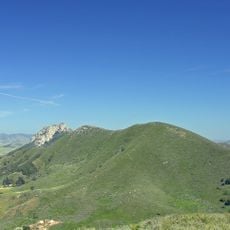
Morro Rock is the westernmost and best known of the Nine Sisters, a chain of nine volcanic necks and hills running from Morro Bay south to Islay Hill near San Luis Obispo. The Salinan name for the rock is Le'samo and the Chumash name is Lisamu. It is also the only one of the nine that stands in the sea.
The community of curious travelers
AroundUs brings together thousands of curated places, local tips, and hidden gems, enriched daily by 92,654 contributors worldwide.