Aquatic Park Historic District, Maritime Historic District in San Francisco, United States
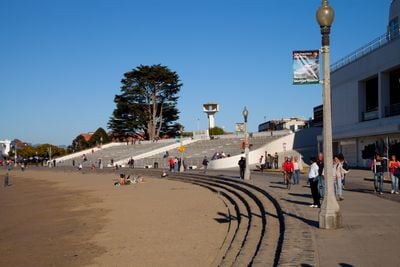
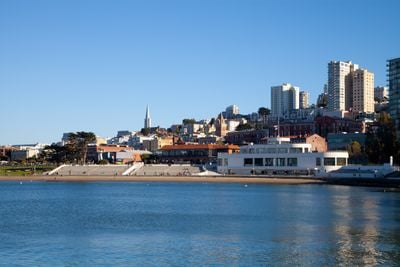
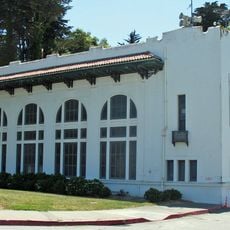
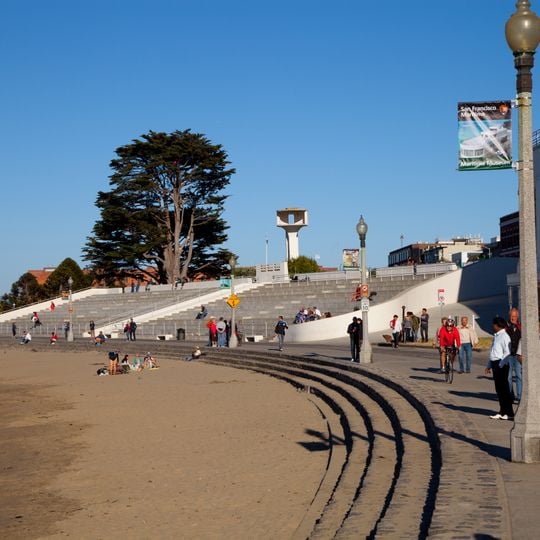
Aquatic Park Historic District is a waterfront complex on San Francisco Bay built around a man-made lagoon on the site of Black Point Cove. A sandy beach and a stepped concrete seawall front the lagoon, with a fan-shaped bank of pale concrete bleachers rising behind it and a small white open-framed tower at the top. The 1936 Streamline Moderne bathhouse, now the San Francisco Maritime Museum, is a long low white building with a band of dark-framed windows and a thin blue stripe near the roof.
The complex was built in the 1930s by the Works Progress Administration, the New Deal agency that put the unemployed to work. The bathhouse, now the San Francisco Maritime Museum, was completed in 1936 in Streamline Moderne style. The district was added to the National Register of Historic Places on January 26, 1984, and named a National Historic Landmark in 1987.
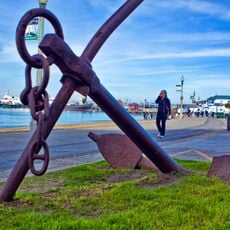
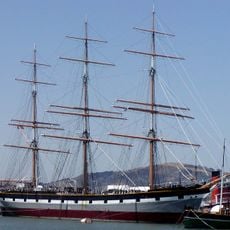
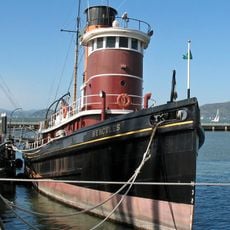
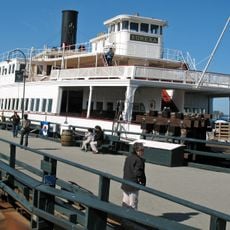
The area holds remnants of its maritime past visible in the museum exhibits and the structures that line the waterfront. The way the space is designed shows how central shipping and ocean trade were to the city's life.
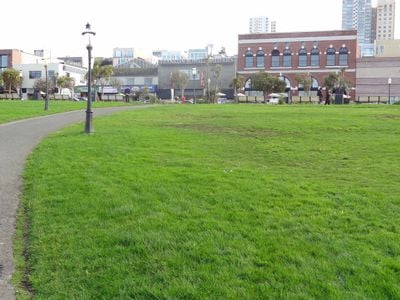
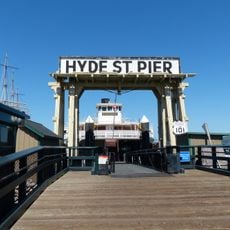
The park sits at the foot of Polk Street, a minute's walk from the Maritime National Historical Park visitor center and Hyde Street Pier. The lagoon is fronted by a sandy beach and a stepped concrete seawall, with the horseshoe-shaped Municipal Pier to the west. The Hyde Street cable car turnaround lies in Victorian Park to the south.
The lagoon occupies the site of Black Point Cove, named for the headland above it in Fort Mason. Near Beach and Larkin streets stands California Historical Landmark No. 236, marking the Spanish packet ship San Carlos, which entered San Francisco Bay on August 5, 1775, the first known European vessel to do so.
The community of curious travelers
AroundUs brings together thousands of curated places, local tips, and hidden gems, enriched daily by 92,843 contributors worldwide.