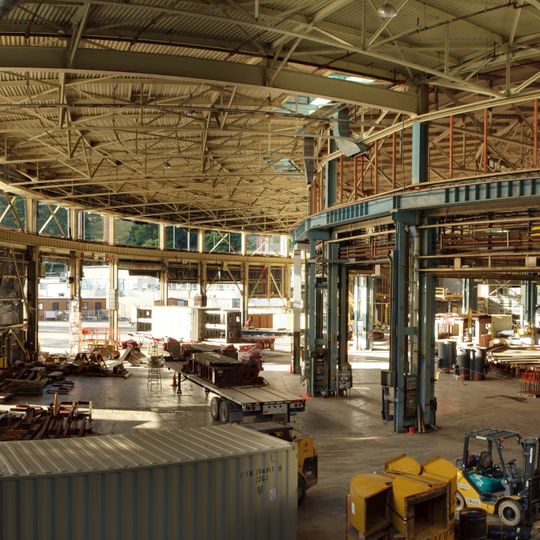
Bevatron, Particle accelerator at Lawrence Berkeley National Laboratory, US
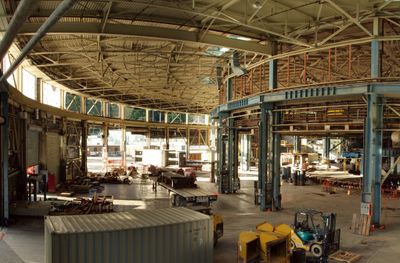
The Bevatron was a particle accelerator at Lawrence Berkeley National Laboratory that accelerated protons to energies of 6.2 billion electron volts using a 10,000-ton iron magnet and extensive vacuum system. The facility was later merged with SuperHILAC to enable acceleration of heavier atomic nuclei to relativistic energy levels.
The Bevatron was constructed in the 1950s and made the groundbreaking discovery of the antiproton in 1955, which earned two scientists the Nobel Prize in Physics in 1959. This discovery opened new perspectives on the structure of matter and the fundamental forces of the universe.
The place was the setting for groundbreaking research on antimatter and subatomic particles that fundamentally changed how physicists understand the world. Work conducted here earned multiple Nobel Prizes and made the site a symbol of modern scientific discovery.
The facility can only be viewed from the outside since it sits on an active research campus that is not open to the general public. Check the Lawrence Berkeley National Laboratory website for information about tours and access to other parts of the campus.
Building costs in 1954 came to 9 million dollars, while demolition in 2012 cost around 50 million dollars. This striking jump in expenses reflects how complex and valuable such scientific instruments were and how challenging it proved to safely dismantle them.
The community of curious travelers
AroundUs brings together thousands of curated places, local tips, and hidden gems, enriched daily by 90,863 contributors worldwide.