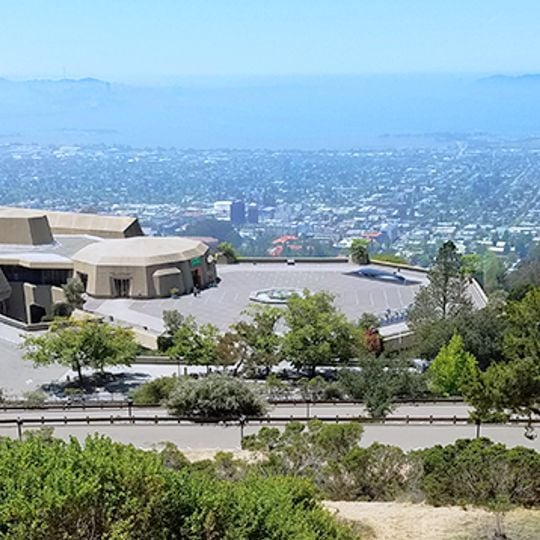
Lawrence Hall of Science, Science museum in Berkeley Hills, US
Lawrence Hall of Science is a public science center in the hills above UC Berkeley, founded in 1968 and named for physicist Ernest O. Lawrence. Its hands-on exhibits include Science on a Sphere, an outdoor seismology park called Forces That Shape the Bay, and an 18-foot granite Sunstones sculpture. Outside stand a life-sized juvenile fin whale model and an 800-million-to-one DNA molecule model.
The museum was founded in 1968 and took its name from Ernest Lawrence, a physicist who won the Nobel Prize. Its creation was connected to the growth of science education at UC Berkeley.
The center is named for Ernest O. Lawrence, UC Berkeley's first Nobel laureate, who won the 1939 Prize in Physics. His 1939 medal was given to the Hall in 2003 by his family after the death of his widow Molly, and a replica now sits in the E.O. Lawrence Memorial room beside a pair of "Dee" electrodes from an early cyclotron.
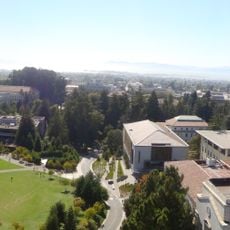
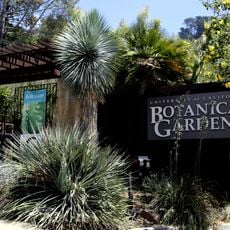
The center sits in the hills above the UC Berkeley campus, less than a mile uphill from the University Botanical Garden, so the approach is by road rather than on foot from downtown. The outdoor Forces That Shape the Bay park and the plaza sculptures are exposed to wind and sun off the bay; bring a layer. The Holt Planetarium runs live, interactive shows of about 25 minutes, so plan a visit around one.
On the plaza stands an 800-million-to-one scale model of a DNA molecule, designed by Michael Jantzen of Valencia, California and installed in spring 1992. It is a sculpture for looking at and playing around, not a walk-in structure, and it is a favourite spot for young visitors.
The community of curious travelers
AroundUs brings together thousands of curated places, local tips, and hidden gems, enriched daily by 92,779 contributors worldwide.