Columbia River Crossing, Road bridge connecting Oregon and Washington across Columbia River
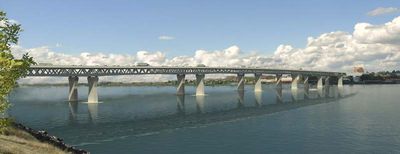
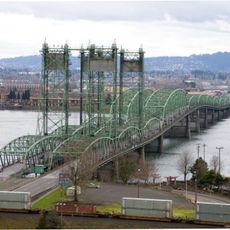
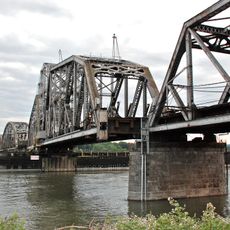
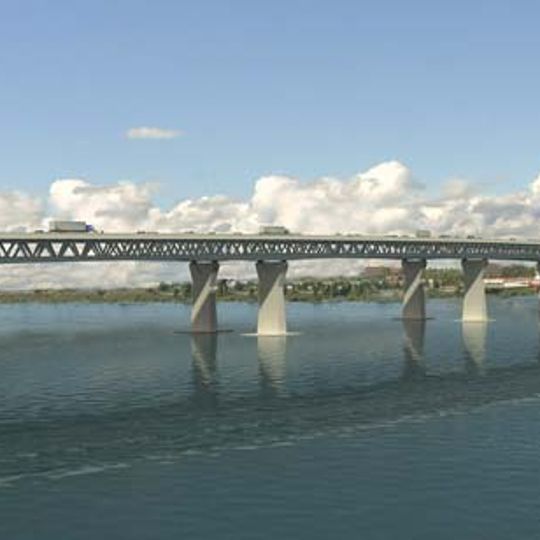
The Columbia River Crossing is a pair of through-truss bridges spanning the Columbia River between Oregon and Washington, featuring vertical-lift draw spans that open to let river traffic pass underneath. The structure accommodates vehicles across three lanes in each direction on both spans.
The original northbound span opened in 1917 as a rail and automotive bridge, serving the region for four decades. The second southbound structure was completed in 1958 to address rising traffic demands between the two states.
The bridge complex serves as a connection point between Portland and Vancouver communities, supporting local events such as the Portland Rose Festival.
The bridges are open to vehicle traffic around the clock, though they lack emergency lanes for disabled cars along the sides. Peak traffic times can bring congestion, so traveling during off-peak hours tends to be faster.
The vertical-lift spans were innovative for their era and still open occasionally to let oversized river vessels and barges pass through from upstream. This dramatic moment provides an unexpected pause in everyday traffic flow.
The community of curious travelers
AroundUs brings together thousands of curated places, local tips, and hidden gems, enriched daily by 91,459 contributors worldwide.