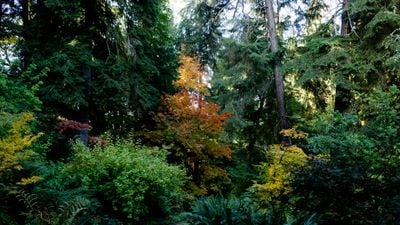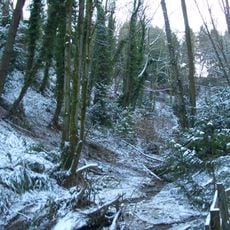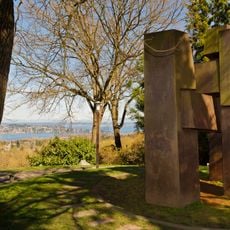
Washington Park Arboretum, Botanical garden in Seattle, United States.
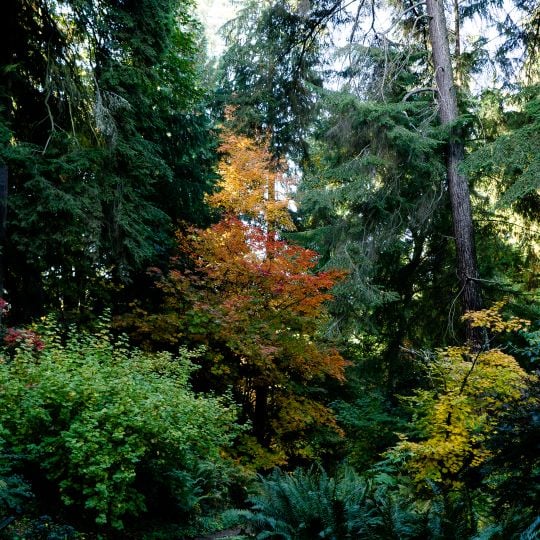
Washington Park Arboretum covers 230 acres in Seattle, with the western part given to the city in 1920 and the arboretum established in 1934. It holds over 1,000 species of rare and native plants, including national collections of Ilex (47 taxa) and genera such as Acer (68 species) and Camellia (12 species). Lake Washington Boulevard and Arboretum Drive run through and along the grounds.
The land was originally used as a logging site by Puget Mill Company and later converted into a public park in 1920. The arboretum itself was established in 1934 and has grown into a major botanical collection since then.
The Graham Visitors Center serves as a community learning space where guided tours and environmental education programs happen regularly. The University of Washington actively uses the grounds for research and teaching purposes.
Lake Washington Boulevard E. runs north-south through the park, while Arboretum Drive E. follows the eastern edge. A footpath passes under the SR 520 overpasses and over boardwalks along the ship canal into the gardens. Azalea Way is a level pedestrian path converted from the former horse racing track.
State Route 520's "ramps to nowhere" were built in 1962 for the planned R. H. Thomson Expressway. Citizens protested on May 4, 1969, and the plan was dropped in 1971, leaving unused ramps in the marsh. A local art collective marked their 2014 demolition with the installation Gate to Nowhere.
The community of curious travelers
AroundUs brings together thousands of curated places, local tips, and hidden gems, enriched daily by 93,806 contributors worldwide.