Winnemucca Lake, Dry lake in Pershing County, United States.
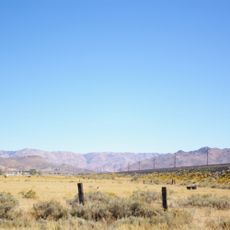
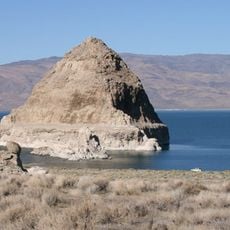
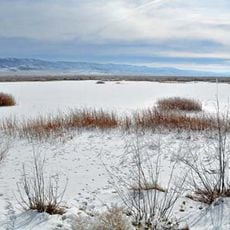
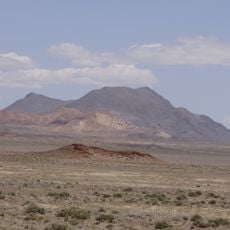
Winnemucca Lake is a dry lake bed in northwestern Nevada, about 45 km long and 7 km wide, lying at 1,150 m between the Lake Range to the west and the Nightingale and Selenite ranges to the east. Its flat bed sits below the level of neighbouring Pyramid Lake, and the western end holds boulders carved with petroglyphs.
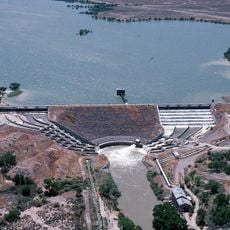
Winnemucca Lake was a shallow, tule-filled lake and a stop for migrating waterfowl, reaching a maximum level of 26 metres in the 1880s. After the Derby Dam was completed on the Truckee River in 1905, water was diverted for irrigation, and State Route 447 later blocked the slough linking it to Pyramid Lake. It has stayed seasonally dry since the late 1930s. In 1865, while known as Mud Lake, it was the site of the Battle of Mud Lake during the Snake War.
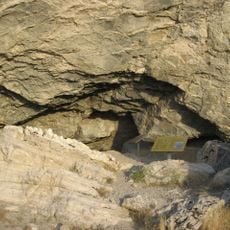
The petroglyphs at the western end of the lake bed, site 26Wa3329, were first described by Frances and Robert E. Connick in 1992. The Pyramid Lake Paiute Tribe does not permit scraping the carvings, so dating relied on carbonate crusts and algal layers beside them. The lake itself is named after Paiute chief Old Winnemucca (c. 1820–1882).
The petroglyph boulders sit at the western end of the lake bed, inside the Pyramid Lake Indian Reservation, so access requires permission from the Pyramid Lake Paiute Tribe. The site lies along State Route 447 between Fernley and Gerlach, and the lake bed itself is reached only by rough desert tracks.
The petroglyphs were dated by analysing carbonate crust and algal layers rather than the carvings themselves, because the Pyramid Lake Paiute Tribe did not permit scraping the grooves. The boulders were reachable only when the lake level was low, from 14,800 to 13,200 years ago and again from 11,300 to 10,500 years ago.
The community of curious travelers
AroundUs brings together thousands of curated places, local tips, and hidden gems, enriched daily by 93,126 contributors worldwide.