Silver City, ghost town in Juab County, Utah, United States
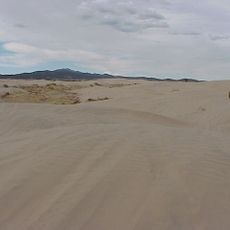
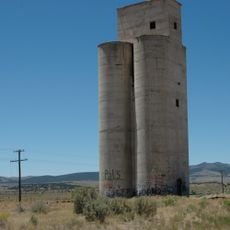
Silver City stands at the mouth of Dragon Canyon on the west flank of the East Tintic Mountains in northeast Juab County, Utah. What remains is a low, broken line of pale tan and beige masonry wall laid in horizontal courses, with a taller stepped section at one end, set in sandy ground with dry grass and gray-green shrubs. The Silver City Cemetery survives and is listed on the National Register of Historic Places.
Silver City emerged in 1869 following the first silver ore discovery in the Tintic Mining District and quickly became the district's leading camp. The town experienced boom periods in the 1870s and 1890s, peaked around 1908 with approximately 1500 residents, then declined as ore processing shifted to distant smelters and metal prices fell.
Silver City's name comes from the silver ore that drew prospectors after George Rust found old Native American mine workings in Dragon Canyon in 1869. The town held a "Smelter Day" celebration in 1908 alongside Utah's Pioneer Day, marking Jesse Knight's new smelter. The Silver City Cemetery survives and is listed on the National Register of Historic Places.
The site is open for self-guided exploration, allowing visitors to examine old foundations and cemetery remnants at their own pace. Sturdy walking shoes are recommended since the terrain is uneven and the elevation exceeds 6000 feet.
Jesse Knight chose Silver City for his smelter because it had the flattest ground in the whole Tintic Mining District. The works opened in 1907 with the Utah Ore Sampling Company, and the town marked "Smelter Day" alongside Pioneer Day in 1908. The smelter closed in 1915 and was moved to Murray.
The community of curious travelers
AroundUs brings together thousands of curated places, local tips, and hidden gems, enriched daily by 93,445 contributors worldwide.