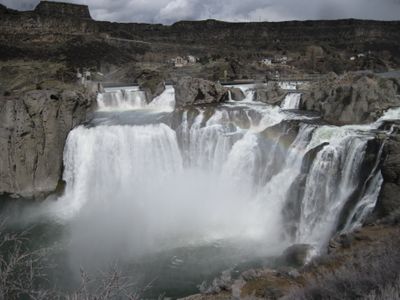
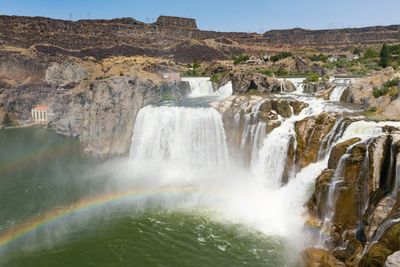
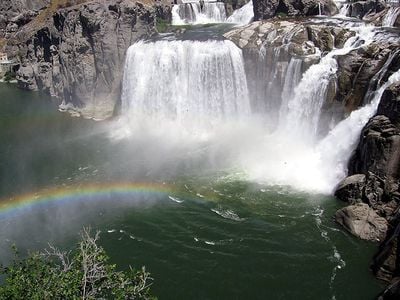
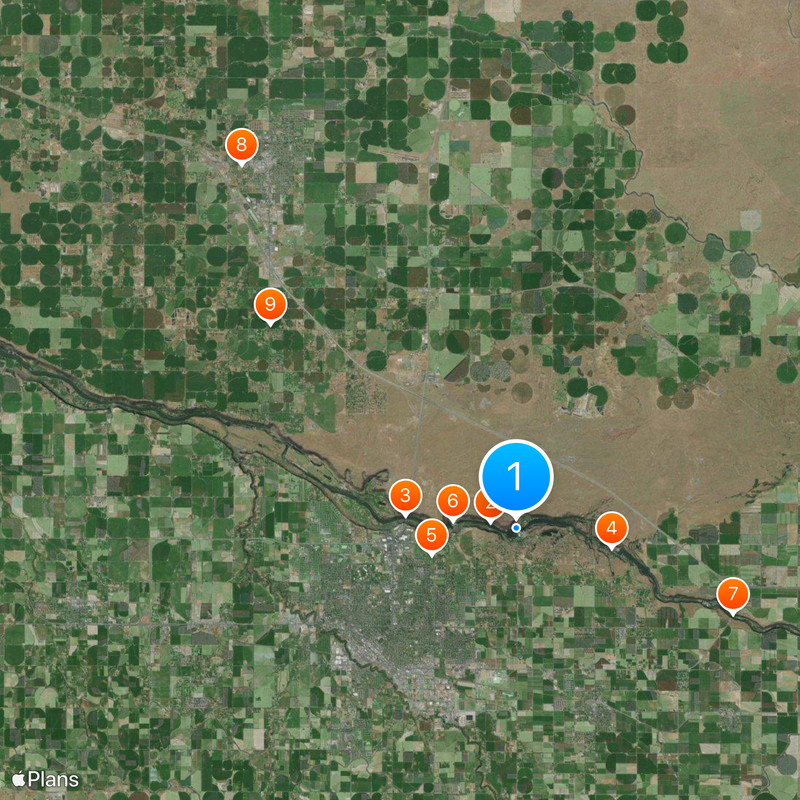
Shoshone Falls, Waterfall in Twin Falls, Idaho.
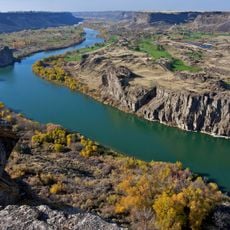
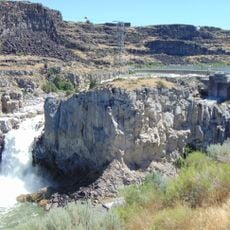
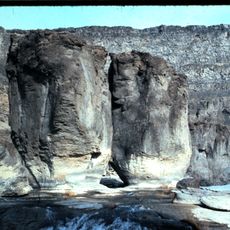
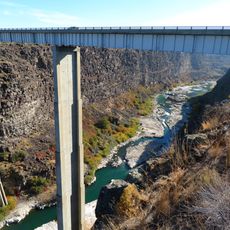
Shoshone Falls sits along the Snake River in Idaho and drops roughly 65 meters over a width approaching one kilometer. The water tumbles over cliffs of dark basalt rock that formed during ancient volcanic activity and were carved by the river channel.
The falls took shape roughly 14,000 years ago when massive floods from Lake Bonneville cut through volcanic rock and carved the present canyon. European exploration reached the region only in the 1840s and brought settlers and trade routes with it.
The falls bear the name of the Shoshone people, whose territory once covered much of present-day Idaho. Visitors today come to use the viewing platforms along the rim and to picnic in the quieter areas above the drop.
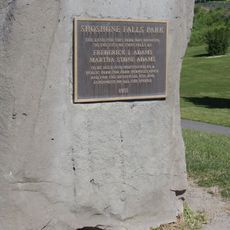
The falls are best seen between April and June, when snowmelt peaks and water is released from upriver reservoirs for steelhead migration. In late summer and fall, irrigation diversions can reduce the flow to a minimum scenic release of 300 cubic feet per second. The park is operated by the City of Twin Falls and has a small information board about the falls' history near the rim.
Water volume shifts dramatically depending on the season and peaks during spring snowmelt before dropping noticeably in summer. Upstream irrigation draws reduce the flow so much that the basin below often appears calmer than during the melt period.
The community of curious travelers
AroundUs brings together thousands of curated places, local tips, and hidden gems, enriched daily by 92,779 contributors worldwide.