Mount Asgard, Mountain peak in Auyuittuq National Park, Canada
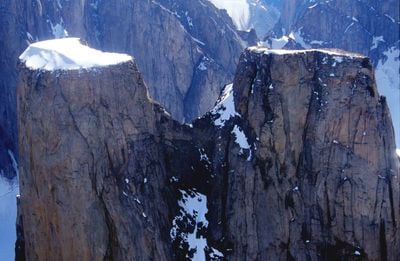
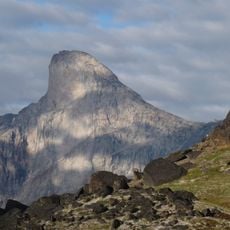
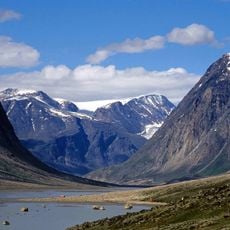
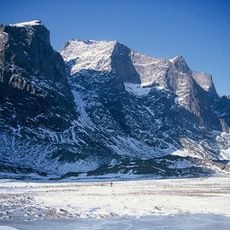
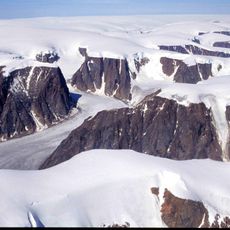
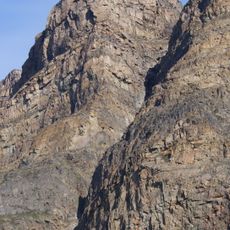
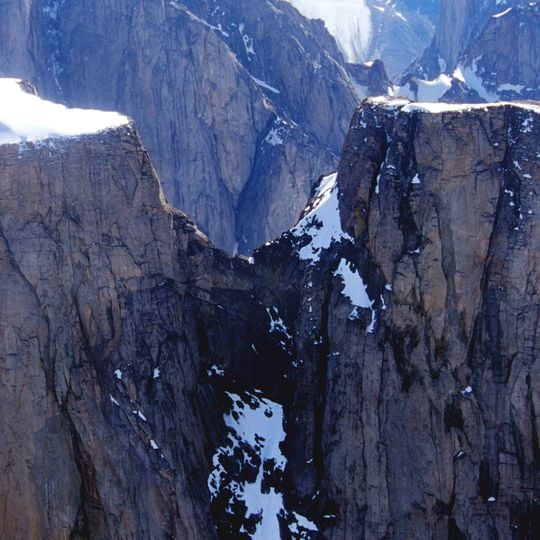
Mount Asgard is a mountain pass in Auyuittuq National Park formed by two cylindrical granite towers separated by a natural saddle formation. The towers rise to approximately 2015 meters and dominate the surrounding Baffin Mountains with their distinctive, nearly symmetrical shapes.
The peak was first summited in 1953 during the Baffin Island Expedition by mountaineers J. Weber, J. Marmet, and Hans Röthlisberger on the North Peak. This early exploration later led to its use as a filming location, bringing it to wider public attention.
The mountain takes its name from Norse mythology, representing Asgard, the heavenly home of the gods in ancient Nordic traditions. The Inuit people of the region have their own relationship with this distinctive double peak, which has served as a landmark in their landscape for generations.
Ascending this peak requires advanced climbing experience, specialized equipment, and careful planning given the extreme weather conditions in the region. Visitors should expect long daylight hours in summer, with access possible only by special flights or lengthy boat travel.
The twin tower system gained international fame when it was used for a base jumping sequence in a 1977 James Bond film, with jumps executed from the towers themselves. This helped the location become known beyond the mountaineering community.
The community of curious travelers
AroundUs brings together thousands of curated places, local tips, and hidden gems, enriched daily by 92,173 contributors worldwide.