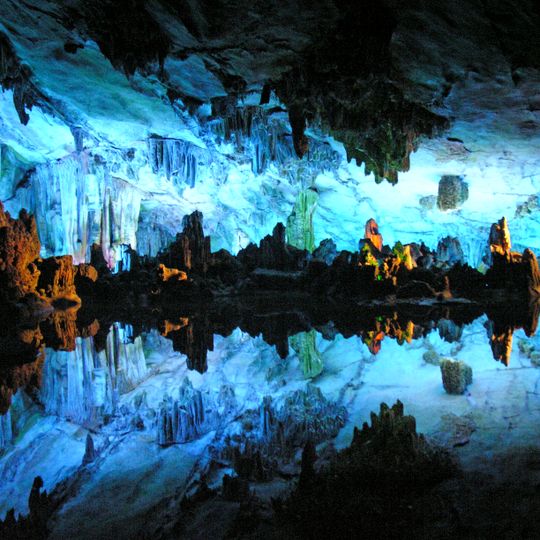
Reed Flute Cave, Show cave in Xiufeng District, China
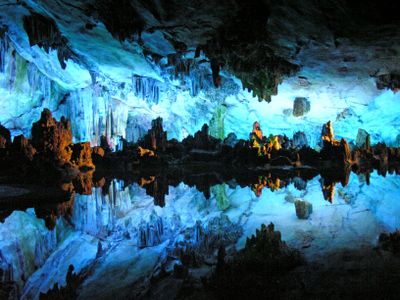
The Reed Flute Cave extends 240 meters in length with three entrances and contains an underground lake illuminated by artificial lighting.
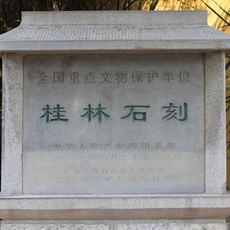
Inscriptions dating from 792 AD during the Tang Dynasty cover the cave walls, while in the 1940s refugees used it as shelter during World War II.
The stalactites and rock formations inside receive names from Chinese literature, including a formation connected to the Dragon King from Journey to the West.
Admission costs 110 CNY for adults over 140 cm tall, 55 CNY for children between 120-140 cm, and remains free for those under 120 cm.
The cave takes its name from the reeds growing near its entrance, which local craftspeople transform into musical instruments.
Location: Xiufeng District
GPS coordinates: 25.30444,110.27556
Latest update: May 27, 2025 09:56
Underground locations provide insights into geological processes and human history. Natural caves display limestone formations, stalactites, and subterranean rivers formed over thousands of years. Artificial sites include Roman catacombs, medieval cellars, and mining tunnels that document economic and social developments. This collection features prehistoric burial chambers with wall paintings, extensive cave systems with lakes and passages, and historical mines for salt, copper, or coal. Visitors can explore archaeological findings, mineral formations, and technical installations from earlier periods. Temperatures remain constant throughout the year, and many sites offer guided tours through their underground chambers.
This collection presents geological formations created through natural processes over millions of years. From layered sandstone waves in Arizona to volcanic basalt columns in Northern Ireland, these locations demonstrate Earth's geological diversity. Erosion, tectonic activity, and mineral deposits have shaped landscapes that provide insights into our planet's history. The selection includes limestone caves in New Zealand with glowworms, thermal springs in Turkey with travertine terraces, and colored rock formations in China created by iron-rich minerals. Visitors will find glacier caves in Iceland, canyons in Utah, and salt pans in Namibia. Each location documents specific geological processes and offers opportunities to explore different rock formations and natural phenomena.
Caves form through gradual geological processes that can span millions of years. Water dissolves limestone and creates underground chambers filled with stalactites and stalagmites, while ice caves in alpine regions maintain their frozen formations even during summer months. Each cave system tells a distinct story about the forces that shaped it, from chemical erosion to tectonic shifts that exposed new rock layers to underground rivers. This collection includes some of the most geologically significant caves on Earth. Carlsbad Caverns in New Mexico encompasses more than 30 miles (48 kilometers) of passages filled with mineral formations, while Mammoth Cave in Kentucky extends over 400 miles (650 kilometers) through limestone bedrock. Eisriesenwelt in Austria stretches 26 miles (42 kilometers) and contains ice structures that reform each winter. Reed Flute Cave in Guilin showcases limestone formations that began developing 180 million years ago. Waitomo Caves in New Zealand are home to thousands of glowworms that light the darkness with bioluminescence. Puerto Princesa in the Philippines features an underground river that flows 5 miles (8 kilometers) before reaching the sea. Several caves also preserve human history, including Lascaux in France with its 17,000-year-old paintings. These formations demonstrate how water, ice, and time create underground worlds that reveal both geological and cultural history.
Longsheng Rice Terrace
52.2 km
Moon Hill
67 km
Lingqu
52.5 km
Jingjiang Princes' City
19 km
Mount Kitten
64.1 km
Duxiu Peak
2.8 km
Zengpiyan
9.9 km
Seven-Star Cave
5 km
白崇禧故居
2.9 km
Nine Horses residences
3 km
解放桥
3.5 km
Guihai Forest of Steles Museum
4.3 km
Hua Bridge
4.2 km
正阳步行街
3.3 km
Guilin Office of the Eighth Route Army
2.6 km
Guilin Museum
13.2 km
Official residence of Li Zongren
3.6 km
Guilin Dagoba
4 km
峻山水库
61.2 km
广西省立艺术馆
2.7 km
Xiangui Bridge
59.2 km
Gongcheng Confucian Temple
75.9 km
Gongcheng Emperor Guan Temple
76 km
Stone Carvings of Guilin Confucian Temple
2.7 km
Jianshan Temple
67.4 km
奎光楼
2.7 km
Sun and Moon Pagodas
18.9 km
救亡日报社旧址
2.8 kmReviews
Visited this place? Tap the stars to rate it and share your experience / photos with the community! Try now! You can cancel it anytime.
Discover hidden gems everywhere you go!
From secret cafés to breathtaking viewpoints, skip the crowded tourist spots and find places that match your style. Our app makes it easy with voice search, smart filtering, route optimization, and insider tips from travelers worldwide. Download now for the complete mobile experience.
A unique approach to discovering new places❞
— Le Figaro
All the places worth exploring❞
— France Info
A tailor-made excursion in just a few clicks❞
— 20 Minutes