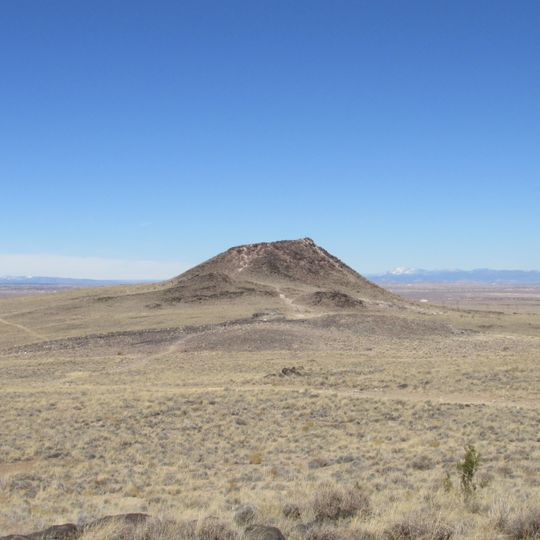
Vulcan, Extinct volcano in West Mesa, Albuquerque, United States
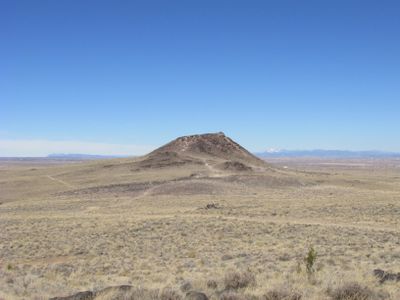
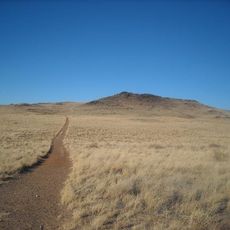
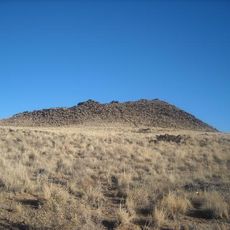
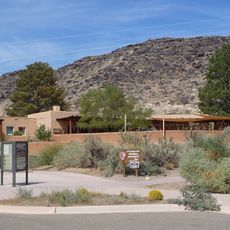
Vulcan is an extinct spatter cone in the West Mesa area of Albuquerque, New Mexico, sitting within Petroglyph National Monument. The cone has visible caves and natural arches along its flanks, formed by side vents during past volcanic activity.
The last eruption happened around 150,000 years ago, leaving behind a solidified pool of gray basalt with columnar jointing still visible inside the crater. The cone took shape during an early period of volcanic activity that also produced the long chain of vents across West Mesa.
From 1951 to 1973, students painted a large letter J on the eastern slope, and locals still call it J Volcano today. That informal name stuck and is still used in everyday conversation around Albuquerque.
The cone is accessible through Petroglyph National Monument, where marked trails lead from the park visitor areas toward the volcanic features. Sturdy footwear is a good idea, as the ground is rocky and uneven in places.
The cone contains sinuous lava tubes on its northeast and northwest flanks, some reaching about 300 feet (90 meters) long with diameters between roughly 8 and 20 inches (20 to 50 centimeters). These tubes show how molten rock once moved through the interior of the mountain.
The community of curious travelers
AroundUs brings together thousands of curated places, local tips, and hidden gems, enriched daily by 91,761 contributors worldwide.