Chest opened
+${chestReward.xp} XP
Explorer
NOUVEAU ×${chestReward.collectible.quantity}
tapez pour fermer

See the monuments around you in AR Open chests in the app

Around Us is built for your phone — point your camera at the streets and discover the monuments and places around you in augmented reality. Around Us is built for your phone — chests unlock when you walk, explore and capture nearby places.

•

Enable Location

We need your location to show you interesting places around you

Discover nearby places

Find interesting locations and hidden gems around you

Precise directions

Get accurate directions and distances to places

Your location is never shared with other users. It's only used when you tap the location button.

NIST-F1

Log in to your account

Start exploring — it's free

Trusted by 93,808 travelers worldwide

Continue with Google
Continue with Apple
or

We will send you a code to connect

By continuing, you accept our Terms and Conditions and our Privacy Policy

Check your inbox

We've sent a pincode in your inbox. Please enter the code below.

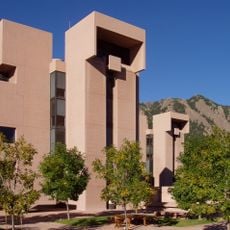
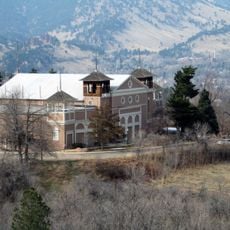
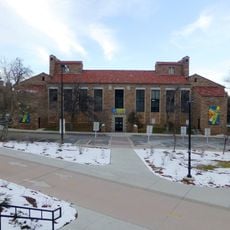
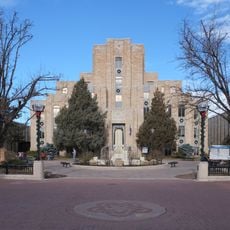
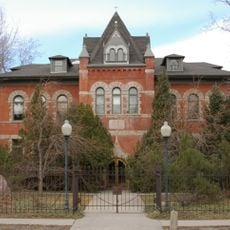
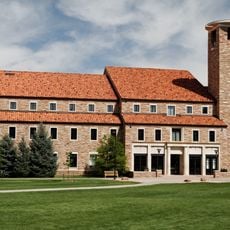
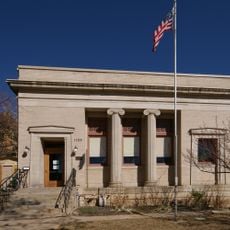
NIST-F1, Atomic clock facility at National Institute of Standards and Technology, Boulder, United States

NIST-F1 is an atomic clock facility at the National Institute of Standards and Technology in Boulder that measures time by observing cesium atoms in a vacuum chamber. This facility was specifically engineered to provide the most accurate time measurements needed for GPS navigation, telecommunications, and power grid operations.

NIST-F1 replaced NIST-7, a cesium beam clock used from 1993 to 1999, and was built and tested in under four years by Steve Jefferts and Dawn Meekhof of NIST's Time and Frequency Division. It was ten times more accurate than its predecessor. NIST announced its successor, NIST-F2, in April 2014, with plans to run both clocks simultaneously; NIST-F1's last contribution to BIPM's TAI came in March 2016.

NIST-F1 defines the second by pushing laser-cooled cesium atoms upward through a microwave chamber; the microwave frequency that makes them fluoresce most strongly sets the unit of time. Similar fountain clocks run at the Paris Observatory, the UK's National Physical Laboratory and Germany's Physikalisch-Technische Bundesanstalt.

Visitors can only view the facility from limited public areas, as it operates in a controlled laboratory environment not open for general access. Contact NIST directly if interested in tours or educational demonstrations about timekeeping technology.

NIST-F1's microwave cavity was rebuilt starting in 2020 to create NIST-F4, which as of April 2025 was undergoing certification by the BIPM. The original clock's last contribution to BIPM's international atomic time was in March 2016.

The community of curious travelers

AroundUs brings together thousands of curated places, local tips, and hidden gems, enriched daily by 93,808 contributors worldwide.

Start exploring
GPS coordinates
39.99400,-105.26400
Latest update
November 4, 2026 02:49
Around this place
Show the full map
Reviews
Share your experience

No review yet

Discussions
Start a discussion...

No discussion yet

« NIST-F1 - Atomic clock facility at National Institute of Standards and Technology, Boulder, United States » is provided by Around Us (aroundus.com). Images and texts are derived from Wikimedia project under a Creative Commons license. You are allowed to copy, distribute, and modify copies of this page, under the conditions set by the license, as long as this note is clearly visible.

Discover hidden gems everywhere you go!

From secret cafés to breathtaking viewpoints, skip the crowded tourist spots and find places that match your style. Our app makes it easy with voice search, smart filtering, route optimization, and insider tips from travelers worldwide. Download now for the complete mobile experience.
Around Us App Screenshot
❝

A unique approach to discovering new places❞

— Le Figaro

❝

All the places worth exploring❞

— France Info

❝

A tailor-made excursion in just a few clicks❞

— 20 Minutes

Around Us
Travel Guide & Maps
Download

Send to your phone

QR Code
1

Open the camera app on your mobile.

2

Point at the QR code with your camera. A notification will appear.

3

Tap the notification to open the link.