Hudson-Meng Bison Kill, Archaeological site in Sioux County, Nebraska, United States.
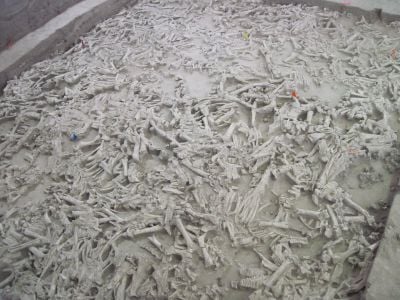
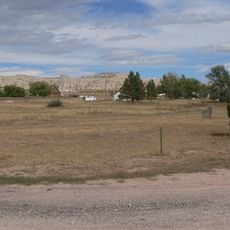
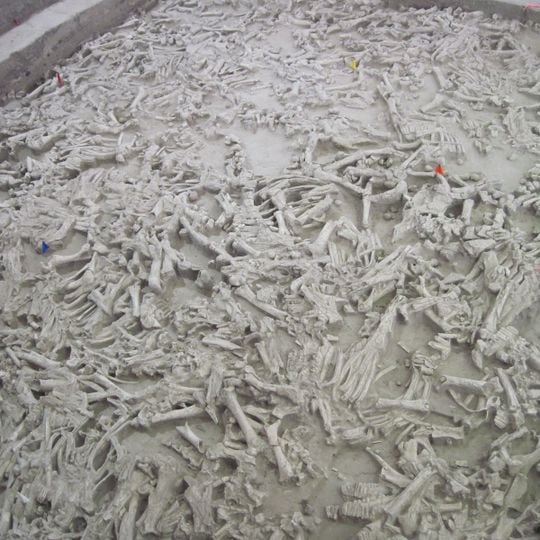
Hudson-Meng Bison Kill is a fossil site in the Oglala National Grassland of Sioux County, Nebraska, where a dense mass of large limb bones lies on light grey dusty ground inside a low-walled enclosure. Small blue, yellow and orange survey flags mark the deposit. The bonebed holds remains of up to 600 bison dated to about 10,000 years ago.
Ranchers Bill Hudson and Albert Meng found the bonebed in 1954 while digging a pond. Larry Agenbroad excavated over 400 square meters in the 1970s, then the largest Alberta Culture bison site known. In the 1990s Larry Todd and David Rapson concluded the bison died of natural causes, not a kill. Later digs added an Eden component.
The site's name comes from ranchers Bill Hudson and Albert Meng, who found the bonebed in 1954 while digging for a pond. Later excavations by Larry Todd and David Rapson in the 1990s showed the bison died of natural causes, so the "Kill" in the name is historical rather than accurate. Visitors can see the bonebed in a shallow enclosure marked with small survey flags.
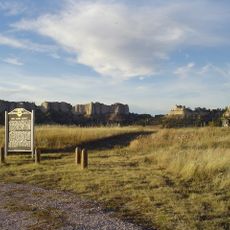
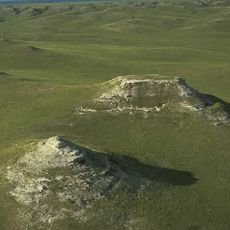
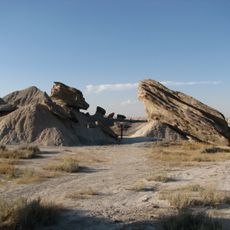
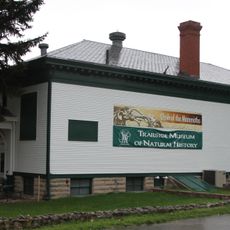
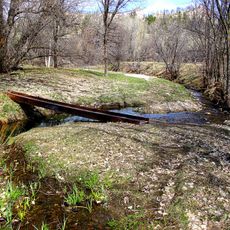
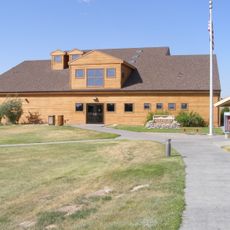
A visitor center offers guided tours and educational displays about the site and its discoveries. A hiking trail connects the location to nearby geological formations, allowing visitors to explore both natural and archaeological features.
The bonebed was long called a kill site, but 1990s excavations by Larry Todd and David Rapson concluded the bison died of unknown natural causes. Later work since 2006 also found an Eden component alongside the Alberta component.
The community of curious travelers
AroundUs brings together thousands of curated places, local tips, and hidden gems, enriched daily by 94,379 contributors worldwide.