Mount Rundle, Mountain in Banff National Park, Alberta, Canada
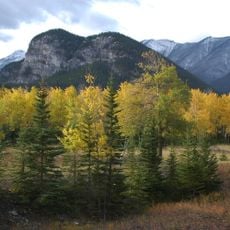
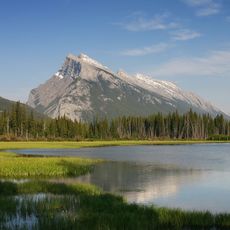
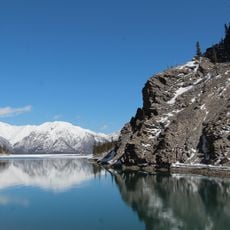
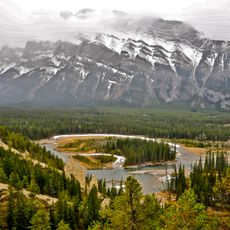
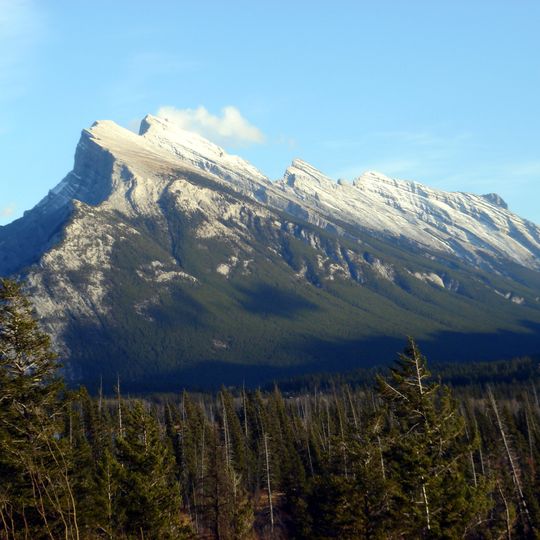
Mount Rundle is a mountain in Banff National Park whose ridge runs over 12 kilometres along the south side of the Trans-Canada Highway from Banff toward Canmore, with seven distinct peaks; the third peak southeast of Banff is the highest at 2,949 metres. Its upper faces are pale gray and tan bare limestone and dolomite, cut by diagonal gullies and layered ledges, above dark green forest.
John Palliser renamed the mountain in 1858 after Reverend Robert Rundle, a Methodist who did missionary work in western Canada in the 1840s and visited the Stoney-Nakoda of the area in 1844 and 1847. The Paleozoic limestones, dolomites and shales were pushed up along the Rundle thrust fault during the Columbian Orogeny, between late Jurassic and early Cretaceous time, then sculpted by Pleistocene glaciers.
The Cree name for the mountain is Waskahigan Watchi, or house mountain. Reverend Robert Rundle, after whom John Palliser renamed it in 1858, visited the Stoney-Nakoda of the area only in 1844 and 1847 and introduced syllabics, a writing system developed for the Cree, during his missionary work.
Hiking here requires good fitness and should be done during daylight hours, as the exposed paths can be dangerous in bad weather or poor light. Visitors should come prepared for changing mountain conditions with appropriate clothing and gear for different temperatures.
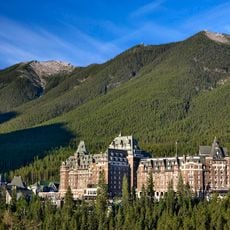
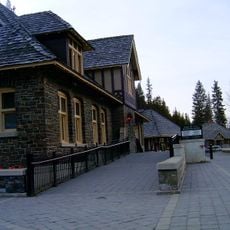
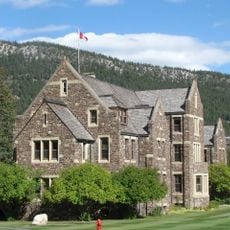
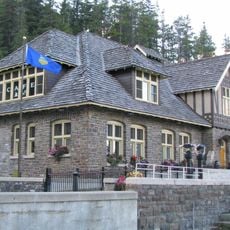
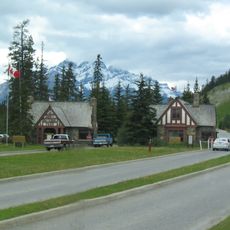
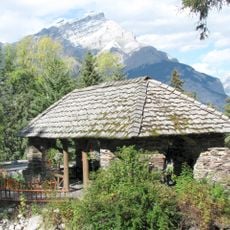
Rundle rock, a fine-grained Triassic sandstone, was first quarried on Mount Rundle and used in the Banff Springs Hotel and several Parks Canada buildings. The mountain's name also labels the Rundle Group, the grey limestone and dolomite unit forming its upper cliffs.
The community of curious travelers
AroundUs brings together thousands of curated places, local tips, and hidden gems, enriched daily by 93,782 contributors worldwide.