Mesa Falls Tuff, Volcanic tuff formation in eastern Idaho, United States
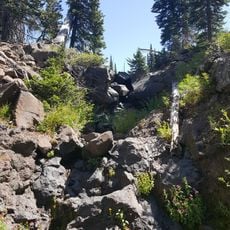
Mesa Falls Tuff is a volcanic rock formation in eastern Idaho that stretches hundreds of meters thick and appears across the Island Park region, the lower slopes of the Centennial Mountains, and the southern Madison Range. The rock is layered in different sections, each showing signs of different volcanic processes and preserving details about the area's geological past.
The Mesa Falls Tuff was produced by the Mesa Falls eruption about 1.3 million years ago, which formed the Henry's Fork Caldera in Idaho, west of Yellowstone National Park. It was the second most recent caldera-forming eruption of the Yellowstone hotspot, preceded by the Huckleberry Ridge Tuff and followed by the Lava Creek Tuff.
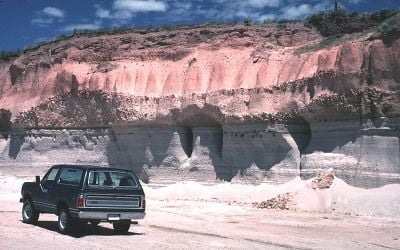
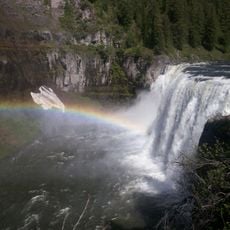
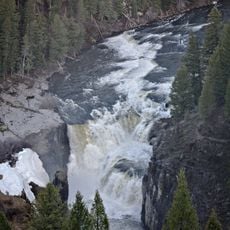
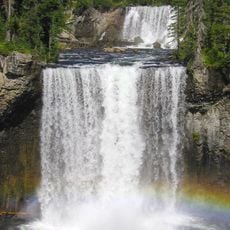
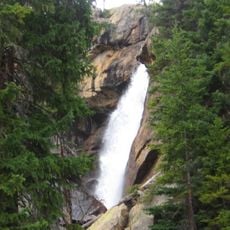
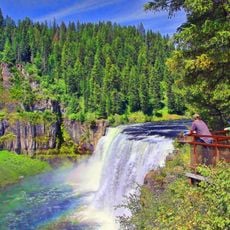
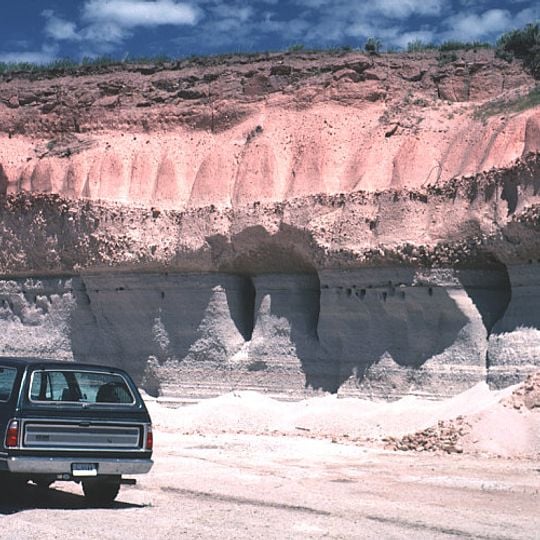
The name comes from Mesa Falls on the Henrys Fork of the Snake River, where the tuff is exposed. The formation is the deposit of the Mesa Falls eruption, one of three caldera-forming eruptions of the Yellowstone hotspot, between the Huckleberry Ridge and Lava Creek events. Visitors can see the pinkish upper rock above a darker band in the cliff face.
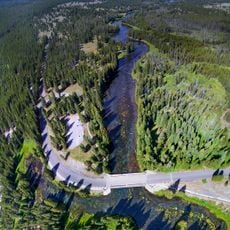
The best spot to view this formation is along U.S. Highway 20, north of Ashton, where the layered rock is clearly visible from roadside locations. Sturdy footwear is recommended since the terrain is uneven and rocky.
The Mesa Falls Tuff is the middle of three caldera-forming eruptions of the Yellowstone hotspot: it followed the Huckleberry Ridge Tuff and preceded the Lava Creek Tuff. Its eruption 1.3 million years ago formed the Henry's Fork Caldera in Idaho, west of Yellowstone National Park, and ejected about 280 cubic kilometres of material.
The community of curious travelers
AroundUs brings together thousands of curated places, local tips, and hidden gems, enriched daily by 93,466 contributors worldwide.