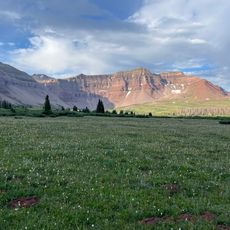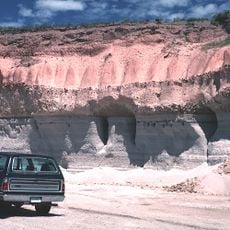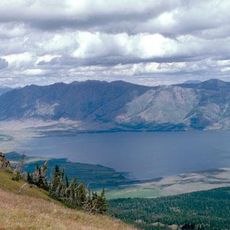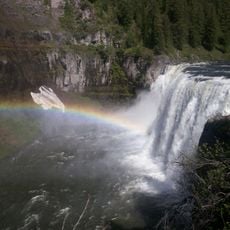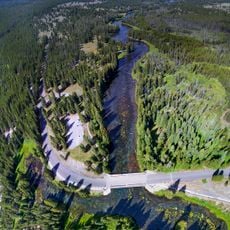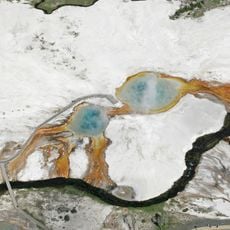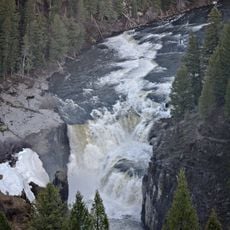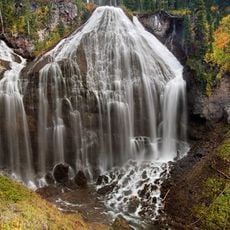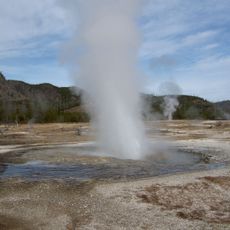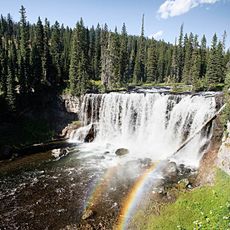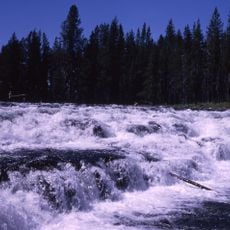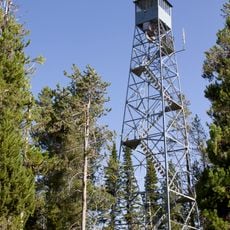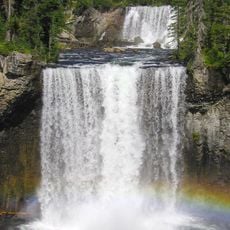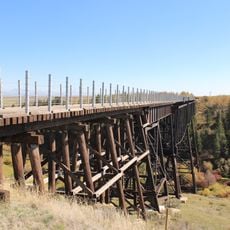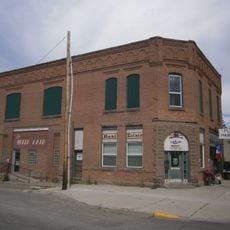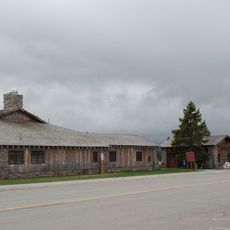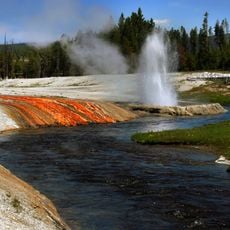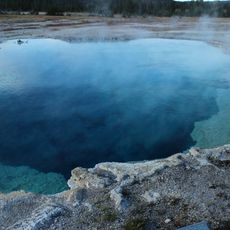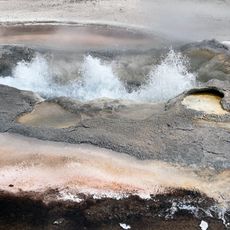
Huckleberry Ridge Tuff, Volcanic tuff formation in Yellowstone National Park, Wyoming.
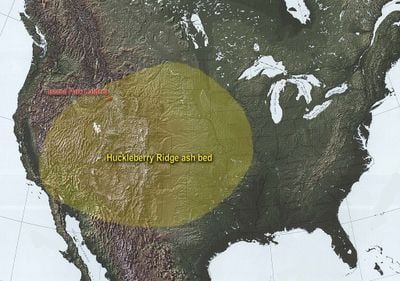
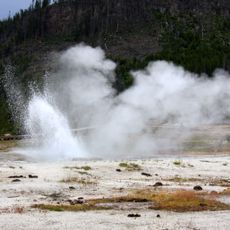
Huckleberry Ridge Tuff is a volcanic rock formation in Fremont County, Wyoming, made of thick layers of pumice and ash. The layers spread across much of northwestern Wyoming and show different textures depending on how deeply they were buried and how hot they were when they cooled.
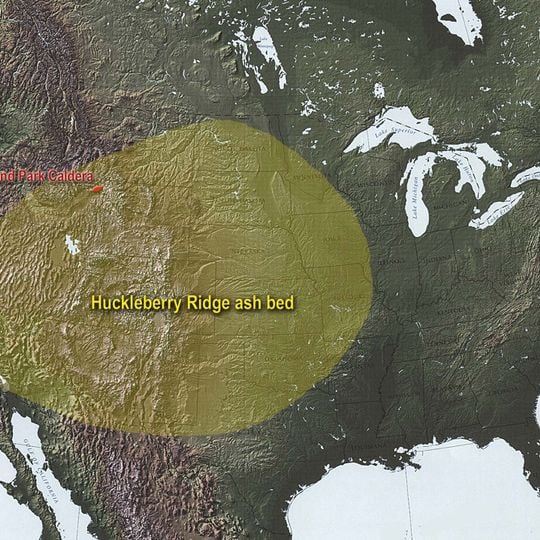
The deposit formed around 2.1 million years ago during a huge eruption in the Yellowstone area that released more than 2,400 cubic kilometers (580 cubic miles) of material. This eruption was one of the largest in Earth history and shaped the northwestern North American landscape for millennia.
The name comes from Huckleberry Ridge in Montana, where geologists first documented the formation. Today, hikers along the Gardner River see the deposits as gray and pinkish rock layers in the canyon walls.
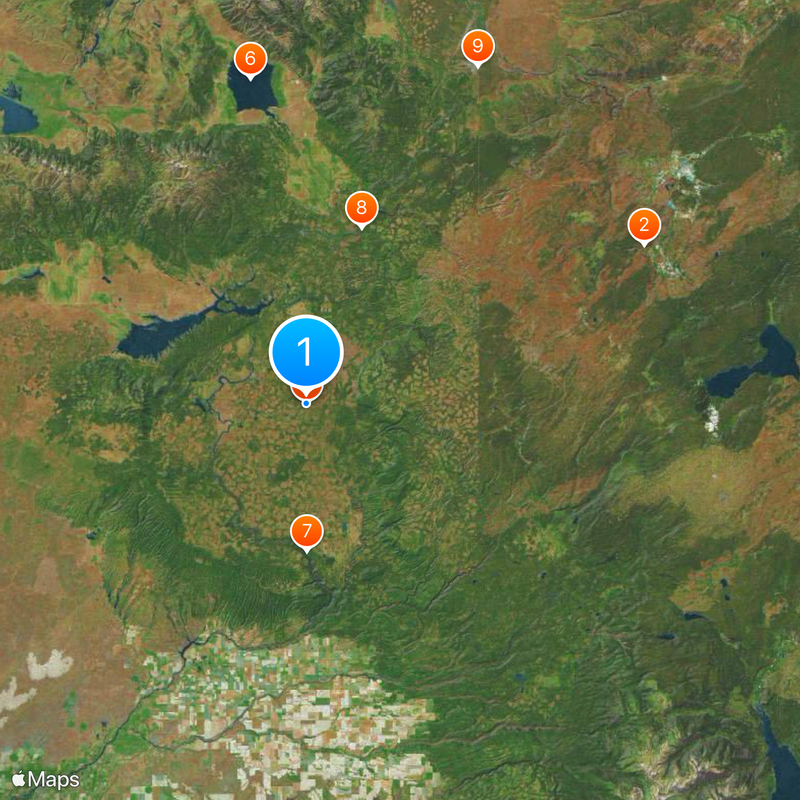
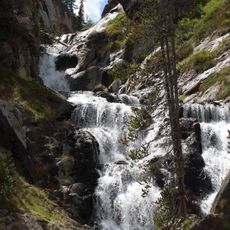
The layers are best seen along the trails near Osprey Falls and along the Gardner River above Mammoth. In wet weather, the surfaces become slippery, so sturdy footwear is important, especially on steep sections.
Geologists recognize three separate eruption phases in the formation, each with its own mineral makeup and grain size. Some sections contain tiny quartz and feldspar crystals that sparkle in sunlight.
The community of curious travelers
AroundUs brings together thousands of curated places, local tips, and hidden gems, enriched daily by 92,051 contributors worldwide.