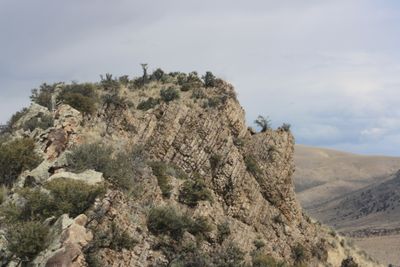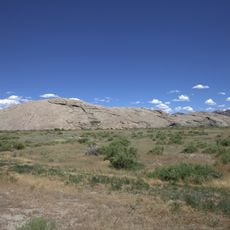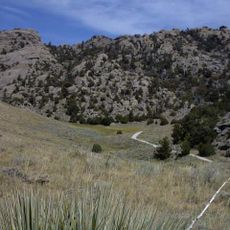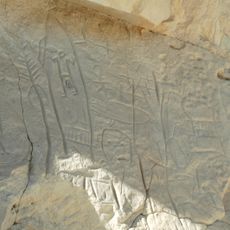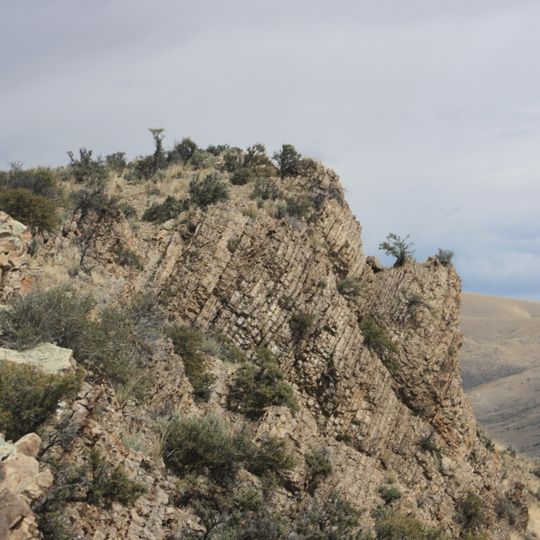
Phosphoria Formation, Permian geologic formation in western Idaho and Wyoming, United States.
The Phosphoria Formation is a Permian-era rock layer spanning several western states, composed of phosphorite, black shale, chert, and limestone. The layers extend hundreds of meters deep beneath the landscape surface.
The formation developed about 280 million years ago during the Early Permian period, when marine sediments accumulated in a basin between the continental margin and the North American shelf. This sediment buildup created the rock layers visible today.
The formation holds fossils of brachiopods and crinoids along with teeth from the prehistoric shark Helicoprion, revealing what marine life looked like in ancient oceans. These remains help visitors understand the creatures that once inhabited these waters.
The formation lies beneath the surface and is visible in several locations through mining operations where phosphate rock is extracted. Visitors can best explore the deposit in mining regions like Idaho and Wyoming.
The formation is one of North America's largest oil sources, having generated more than 225 billion barrels of petroleum. This potential makes it one of the most important energy resources in the region.
The community of curious travelers
AroundUs brings together thousands of curated places, local tips, and hidden gems, enriched daily by 92,532 contributors worldwide.