Cloverly Formation, Geological formation in Big Horn Basin, Wyoming, US.
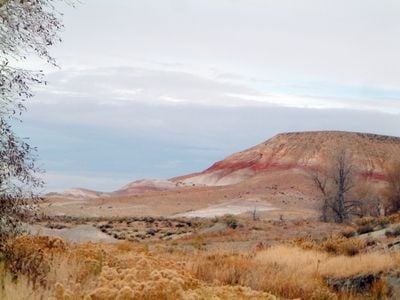
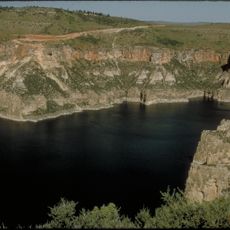
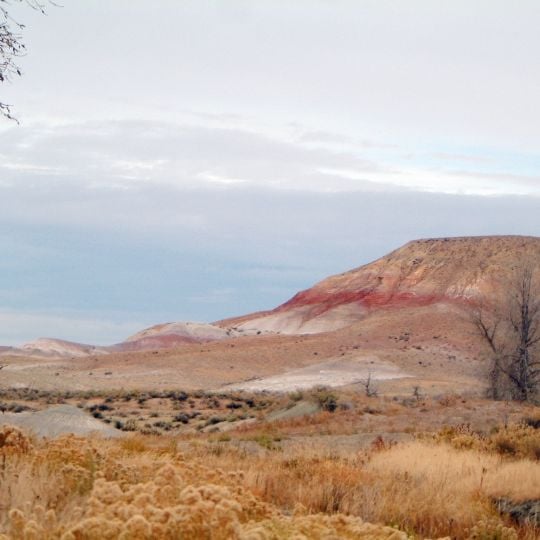
The Cloverly Formation is a geological layer in the Big Horn Basin in Wyoming made up of clay and sandstone deposits. The layers show distinct color variations from gray to reddish and contain many fossil remains from past eras.
The layer was first scientifically described in 1904 and named after a nearby post office located in the eastern part of the Big Horn Basin. This name helped geologists identify the formation clearly in their research.
The name comes from a post office on the eastern side of the Bighorn Basin, used by N. H. Darton in 1904. John Ostrom's 1970 study of the formation's dinosaurs led to Deinonychus, the sickle-clawed theropod that helped revive the debate over birds descending from dinosaurs. The Cloverly Formation Site was designated a National Natural Landmark in 1973.
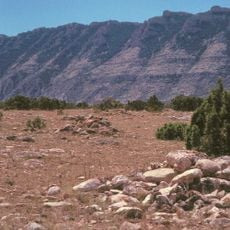
The formation's outcrops lie in the Bighorn Basin along the Montana-Wyoming border, where the Pryor Conglomerate forms thick beds on the west side of the Pryor Mountains. The 1973 National Natural Landmark site is on open rangeland with no visitor facilities, so plan access and landowner permission before setting out.
In 1973 the Cloverly Formation Site was designated a National Natural Landmark by the National Park Service. The formation's fossil beds also yielded the first good remains of Deinonychus, studied by John Ostrom, and three types of dinosaur eggshell have been reported from its rocks.
The community of curious travelers
AroundUs brings together thousands of curated places, local tips, and hidden gems, enriched daily by 92,631 contributors worldwide.