Bighorn Canyon National Recreation Area, National recreation area in Montana and Wyoming, United States.
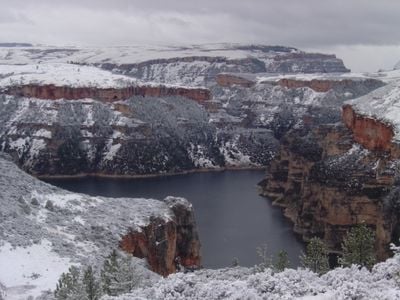
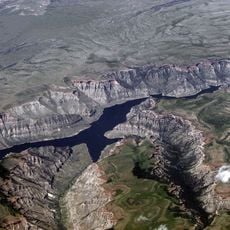
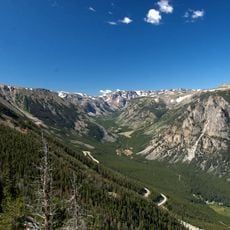
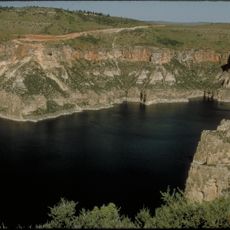
Bighorn Canyon National Recreation Area spans 120,296 acres across the Montana–Wyoming border, with two separate districts: the North District reached via Fort Smith, Montana, and the South District via Lovell, Wyoming. No through road connects them. Yellowtail Dam, a 525-foot structure named for Crow leader Robert Yellowtail, impounds the Bighorn River to form Bighorn Lake, which runs 71 miles, 55 of them inside the recreation area.
Congress established this recreation area in 1966 following the completion of Yellowtail Dam on the Bighorn River. The dam created the lake that now defines the landscape and recreational opportunities in the region.
The Bad Pass Trail along the canyon's western side served as a vital pathway for Native American tribes moving through the region. Today, visitors can walk this historical route and experience the landscape that shaped generations of people.
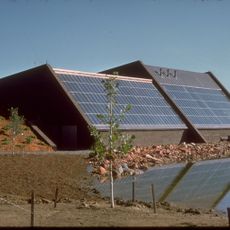
Two visitor centers provide information and guidance: one in the north near Fort Smith, Montana, and one in the south near Lovell, Wyoming. The area can be explored from both ends, each offering different trails and access points.
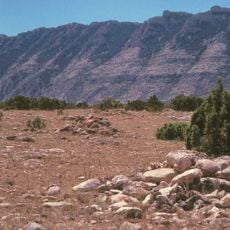
Nearly one-quarter of the Pryor Mountains Wild Horse Range lies inside the recreation area, so mustangs may be seen from the park's roads and overlooks. The range is a separate protected unit that overlaps the park boundary rather than lying wholly within it.
The community of curious travelers
AroundUs brings together thousands of curated places, local tips, and hidden gems, enriched daily by 94,589 contributors worldwide.