Wells Gray Provincial Park, Provincial park in British Columbia, Canada
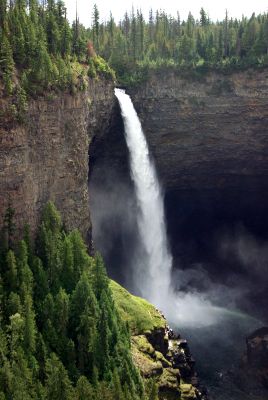
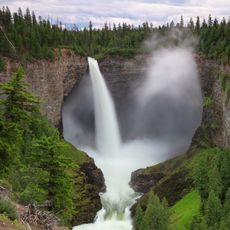
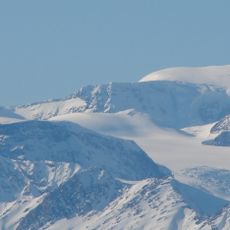
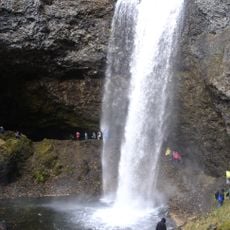
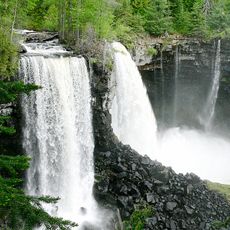
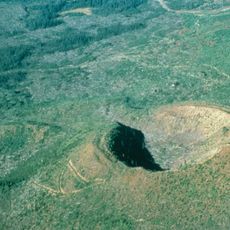
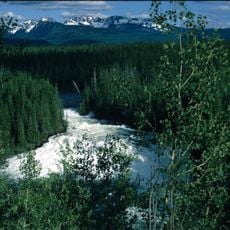
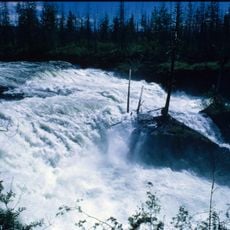
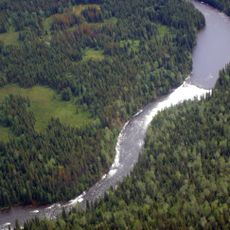
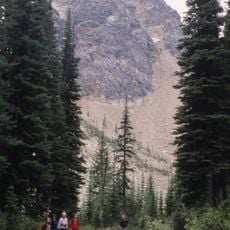
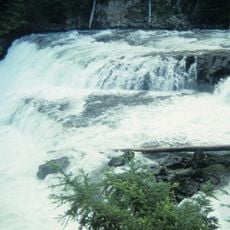
Wells Gray Provincial Park covers 5,415 square kilometres of the southern Cariboo Mountains in east-central British Columbia, protecting 60 percent of the Clearwater River drainage basin. Its southern third holds volcanic plateaus, lava flows and deep canyons crossed by the Clearwater Valley Road. Helmcken Falls drops 141 metres over the lip of one of these plateaus, the fourth highest waterfall in Canada.
The park was established on 28 November 1939 and named after Arthur Wellesley Gray, a provincial government minister. Long before that, the Secwepemc, Tsilhqot'in and Canim Lake peoples hunted here, and a conflict around 1875 over access to caribou herds is recalled by names such as Battle Mountain, Battle Creek and Fight Lake. In 1913 the discovery of Helmcken Falls increased pressure on the province to protect the area, and in April 1996 the park was substantially enlarged, including the Clearwater River Corridor Addition and the Trophy Mountain Addition.
The park is named after Arthur Wellesley Gray, a provincial government minister, when it was established on 28 November 1939. Names such as Battle Mountain, Battle Creek, Fight Lake and Indian Valley recall a conflict around 1875 over access to caribou herds among the Secwepemc, Tsilhqot'in and Canim Lake people. About 35 archaeological sites in the park document these Indigenous cultures.
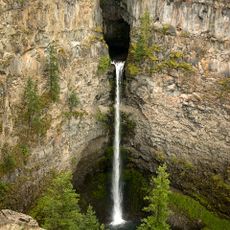
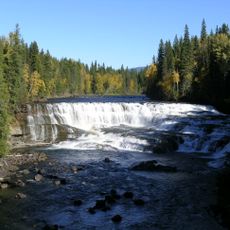
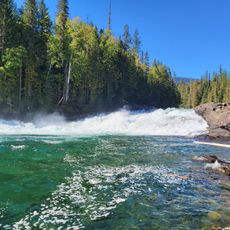
Clearwater Valley Road leads to the entrance and provides access to several trails and waterfalls. Campgrounds are located at different spots, and most trails are walkable from May to October.
Helmcken Falls, at 141 meters one of the tallest waterfalls in Canada, forms a huge ice cone at the base during winter. This cone can grow up to 50 meters tall and lasts until late spring.
The community of curious travelers
AroundUs brings together thousands of curated places, local tips, and hidden gems, enriched daily by 94,218 contributors worldwide.