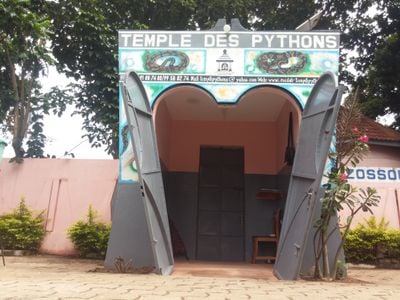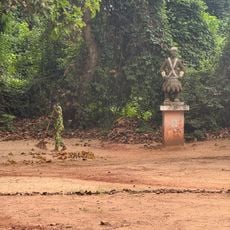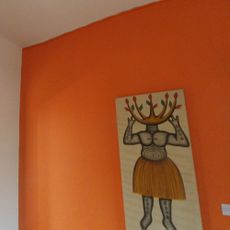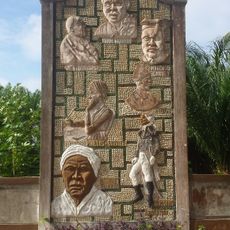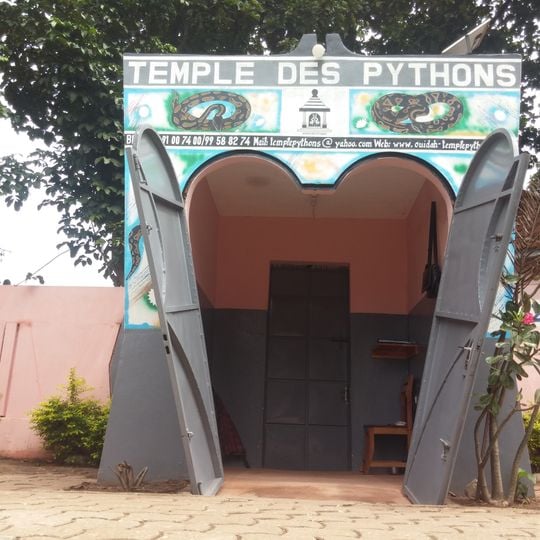
Temple des Pythons, Voodoo shrine in Ouidah, Benin.
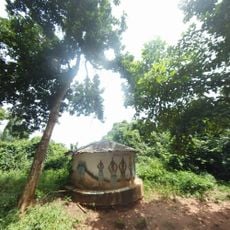
The Temple of Pythons is a sacred site in Ouidah centered on a circular clay structure with a traditional roof that houses over sixty royal pythons. The complex features several rooms and areas for the snakes as well as spaces for visitors to observe the animals at close range.
European travellers' accounts attest a serpent cult at Ouidah from the late 17th century, though the shrine may have moved several times. In 1698 Father Labat published Father Braguez's account of the king consulting the serpent through a priest; a 1723 engraving shows the serpent's hut during the king's coronation. In 1873 Abbe Laffitte described a circular earth building with a dried-grass roof housing about twenty snakes. Ouidah 92 funded restoration in 1992; the mayor closed the site temporarily in 2014 amid family disputes.
The temple's name refers to the royal pythons (Python regius) kept in the first courtyard, where a conical building of about 12 m² houses them. The sacred white pot, the zingbin, is over 200 years old and is brought out every seven years, when 41 postmenopausal women fetch sacred water. Since 10 January 1992, crowds, priests and priestesses gather for major ceremonies, and the officiating priest sacrifices a small goat, pouring its blood on the white cloth around the sacred iroko tree.
The site is easy to reach and located near the center of Ouidah, with friendly guides who lead visitors around and provide explanations. The best time to visit is during daylight hours when the snakes are active and clearly visible.
The pythons are not fed but released once a week to hunt insects and rats, sometimes entering neighbouring houses they know. If a snake does not return within 72 hours, residents bring it back, as all Ouidah inhabitants care for their deity. Worshippers also carry a scar pattern called "2 x 5" — two parallel marks in five places on the face.
The community of curious travelers
AroundUs brings together thousands of curated places, local tips, and hidden gems, enriched daily by 92,894 contributors worldwide.