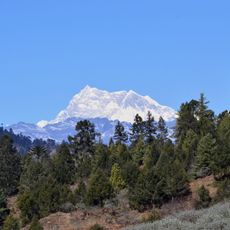
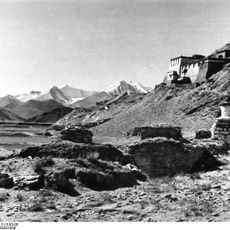
Kula Kangri, Mountain peak at Bhutan-Tibet border.
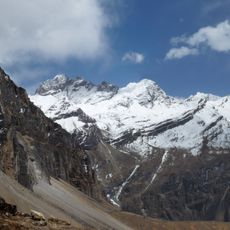
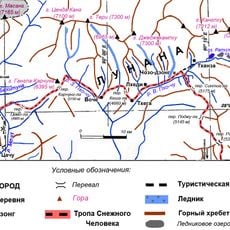
Kula Kangri is a 7,538-metre (24,731 ft) mountain in the eastern Himalayas, with a central peak of 7,418 m and an eastern peak of 7,381 m within 2.5 km to its east. Bhutan once claimed the mountain but relinquished the claim in the 1980s, attributing it to a cartographic error; the current borderline runs through the higher Gangkar Puensum.
Kula Kangri was first surveyed and mapped in 1922, and in 1958 Sasuke Nakao reported that it lay inside Tibet. The first ascent came in 1986, when a joint Japanese-Chinese team of 25 Japanese and 17 Chinese members reached the main summit (7,538 m). In 2001 a Tokai University-Tibet University team made the first ascents of the central (7,418 m) and eastern (7,381 m) peaks.
Kula Kangri is counted among the four sacred mountains of Central Tibet. Its Tibetan name, sku lha gangs ri, is rendered in Japanese sources as "peak of the heavenly emperor". Bhutan long claimed the peak, then dropped the claim in the 1980s and attributed it to a cartographic error.
The mountain demands advanced climbing skills and high-altitude experience, as the ascent routes are steep and weather conditions are severe. Visitors should prepare for extended acclimatization periods and expect unpredictable alpine winds.
Several neighboring peaks in the immediate vicinity also exceed 7,300 meters in elevation. This concentrated cluster of extreme heights makes the region an exceptional destination for experienced mountaineers.
The community of curious travelers
AroundUs brings together thousands of curated places, local tips, and hidden gems, enriched daily by 92,783 contributors worldwide.