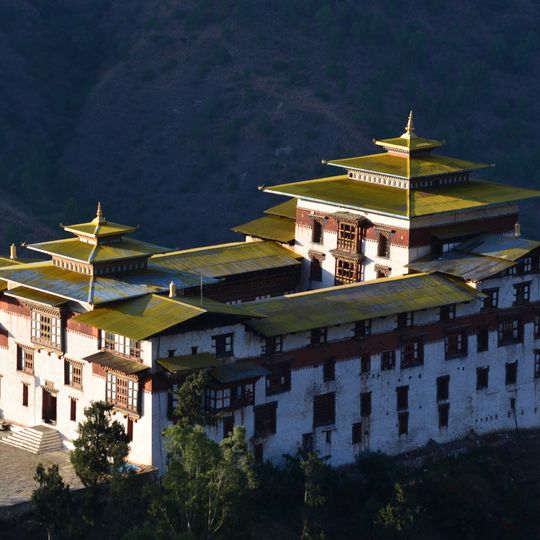
Trashigang Dzong, Dzong fortress in Trashigang, Trashigang District, Bhutan
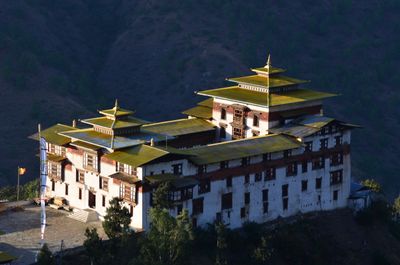
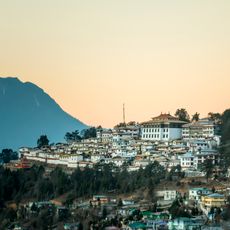
Trashigang Dzong is a white-walled fortress with a red band below its upper level, set on a ledge with steep cliffs on three sides above the Drangme Chhu and Gamri Chhu rivers. Its multi-tiered roofs are golden-yellow, with a central tower topped by a tiered finial and a smaller similar tower to the left. Rows of dark rectangular windows, some with protruding wooden frames, line the walls.
Built in 1659 on the orders of Ngawang Namgyal, who sent Chhogyal Minjur Tempa to subdue local chieftains and raise the fortress above the Drangme Chhu and Gamri Chhu. Gyalsey Tenzin Rabgye enlarged it between 1680 and 1694, and Dzongpon Dopola added to it in 1936. After the 1962 Sino-Indian War, Indian soldiers returning home deposited their rifles in its armoury, where they remain.
The dzong's name, meaning "Fortress of the Auspicious Hill", was given at its consecration by Dudjom Jigdral Yeshe Dorje. Each year it hosts the four-day Trashigang Tshechu, attended by around 1,500 people daily. Monastic and district administrative functions were moved out during restoration, with the clergy relocated to a school in Samkhar Gewog about 10 km away.
The dzong stands on a ledge with cliffs on three sides above the Drangme Chhu and Gamri Chhu rivers. The administrative offices have moved to Trashigang Middle Secondary School and the monks to a school in Samkhar Gewog, about 10 km away, during restoration. The Trashigang Tshechu draws around 1,500 people each day over four days.
After the 1962 Sino-Indian War, Bhutan let Indian soldiers cross eastern Bhutan on their way home, but they had to leave their rifles in the dzong's armoury and travel unarmed. Those rifles are still kept in the dzong today.
The community of curious travelers
AroundUs brings together thousands of curated places, local tips, and hidden gems, enriched daily by 94,122 contributors worldwide.