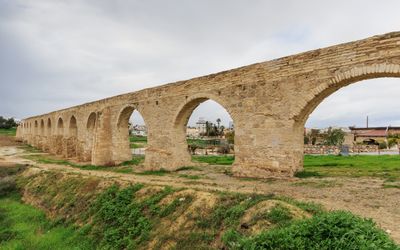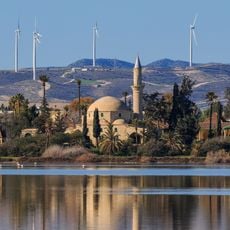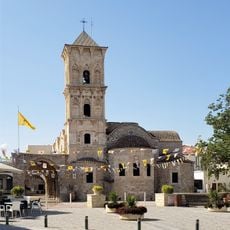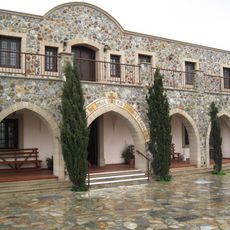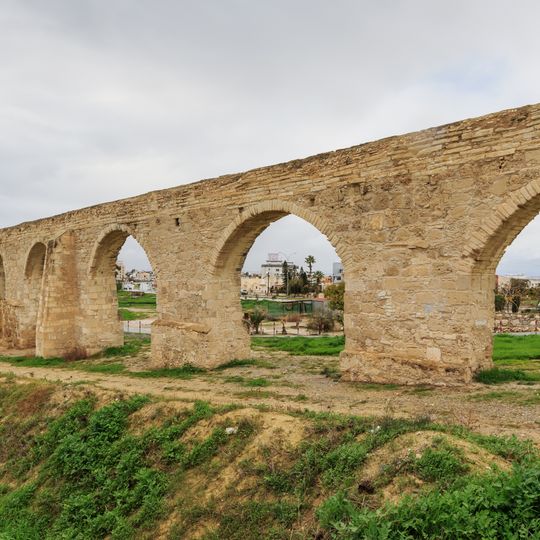
Bekir Pasha Aqueduct, Ottoman aqueduct in Larnaca, Cyprus.
Bekir Pasha Aqueduct is an Ottoman structure that transported water across valleys through arches and underground channels. It combines visible arched sections with hidden engineering passages spanning considerable distance.
The work was built in the mid-1700s under Persian-Islamic water technology influence. It supplied the city for several centuries before modernization made it obsolete.
The structure shows how Ottomans managed water distribution for daily use in the city. It served practical needs like fountains and mills that shaped residents' routines and community life.
The best access is from the old road toward Limassol, where sections of the structure remain visible. The site is accessible year-round, but watch for uneven ground and rough stone surfaces.
The structure combines Persian tunnel-building techniques with Byzantine arch construction, creating a rare mix of different building traditions. This blend of methods makes it architecturally unusual for the region.
The community of curious travelers
AroundUs brings together thousands of curated places, local tips, and hidden gems, enriched daily by 91,028 contributors worldwide.