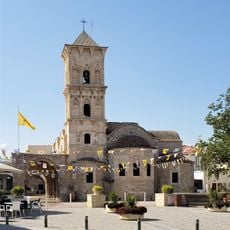
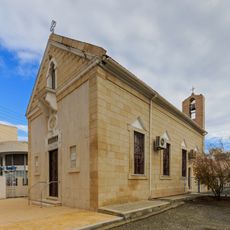
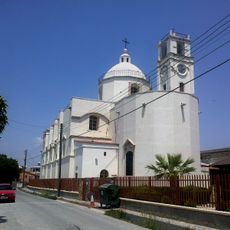
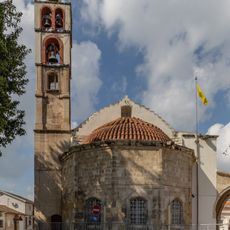
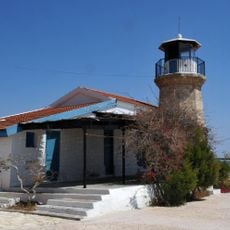
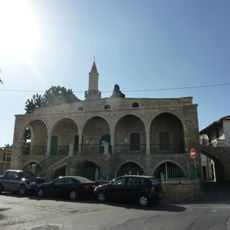
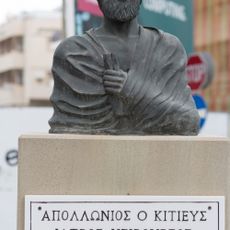
Panagia tis Angeloktistis, Byzantine church in Kiti, Cyprus.
Panagia tis Angeloktistis is a Byzantine church in Kiti with a central dome structure featuring thick stone walls that carry architectural traces from multiple periods. Inside, rare mosaics from the 6th century depict religious figures, while the outer walls reveal how the building was rebuilt and reinforced over time.
The church was originally built as a wooden basilica in the 5th century and underwent major reconstruction between the 11th and 12th centuries following raids that threatened its survival. These cycles of destruction and rebuilding shaped the structure visitors see today and mark it as a testament to community resilience.
The name Angeloktisti means "built by angels," a local tradition explaining the church's construction. Above the Virgin in the apse mosaic is the inscription "HAGIA MARIA," a title adopted after the Council of Ephesus in 431. The mosaic's border shows the Fountain of Life with ducks, beribboned parrots and deer drinking, imagery also found in Ravenna and Sinai.
The church stands in the centre of Kiti, about 12 km southwest of Larnaka and the ancient site of Kition. The 11th-century building is entered from the village square side; the apse mosaic faces the altar end, so walk toward the sanctuary to see it. The interior is small and dim, and the floor follows the older basilica foundations.
Beneath the church lie archaeological remains of burials that reveal this site functioned as a cemetery long before the current building was constructed. These hidden layers beneath visitors' feet tell a deeper story that extends beyond what the visible walls convey.
The community of curious travelers
AroundUs brings together thousands of curated places, local tips, and hidden gems, enriched daily by 94,161 contributors worldwide.