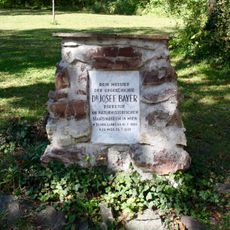
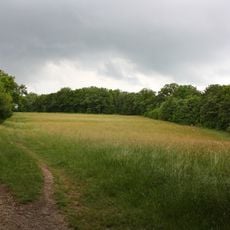
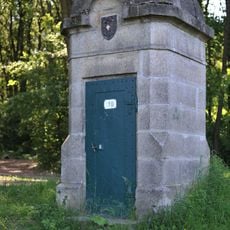
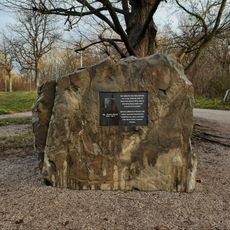
Second Vienna Mountain Spring Pipeline, Water pipeline system in Vienna, Austria
The Second Vienna Mountain Spring Pipeline is a water infrastructure system that carries fresh water from mountain springs in Styria to Vienna. The system uses aqueducts and inverted siphons to cross rivers and valleys, ensuring water reaches the city reliably.
In 1898 Vienna's city council approved a second mountain spring pipeline from the Salza area after studies of the Traisen, Ybbs, Erlauf, Enns and Steyr valleys. The council fixed a minimum supply of 200,000 m³ per day, and construction was completed in 1910, when the line began delivering water from the Hochschwab region.
The pipeline's name recalls Emperor Franz Joseph I: it was originally called the II. Kaiser-Franz-Josef-Hochquellenleitung. Its water comes from springs in the Salzatal near Wildalpen, bought by Vienna in 1899, and the Siebenseequellen were among the sources studied for yield and chemical composition.
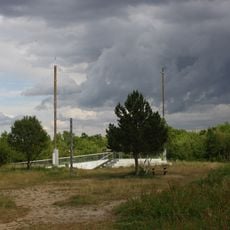
The line runs 183 km from the Hochschwab springs in Styria to Vienna, longer than the first line. Most of it lies underground, so visible traces are limited to surface structures and crossing points; the route through the Salza valley and over the terrain is best followed on a map rather than on foot.
Water from the mountain springs takes roughly one and a half days to travel through all the tunnels and pipes before arriving in Vienna. This long journey shows how far the city had to build to reach pure mountain sources.
The community of curious travelers
AroundUs brings together thousands of curated places, local tips, and hidden gems, enriched daily by 93,898 contributors worldwide.