Herzgruft, Chapel of Loreto in Augustinerkirche, Austria
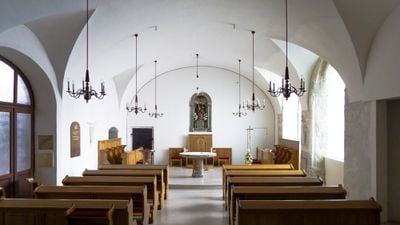
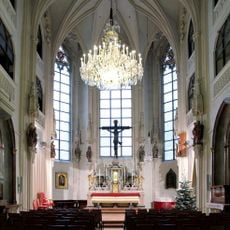
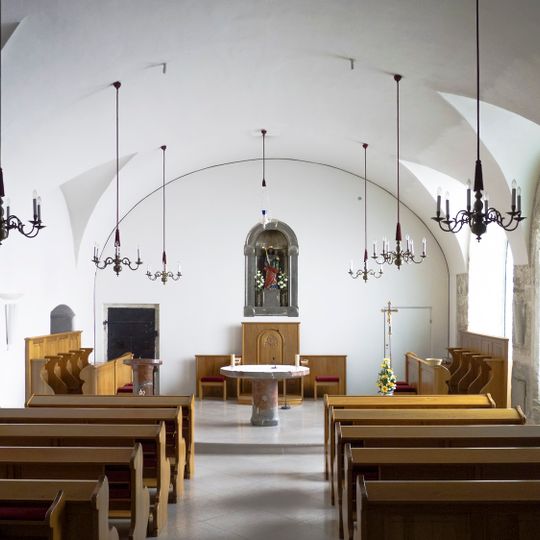
The Herzgruft is the Loreto Chapel in Vienna's Augustinian Church, a white-walled room with a curved ceiling arch. A light-brown wooden cabinet on the far wall holds a niche with a painted crucifix flanked by flowers, below which stands a round stone altar on a cylindrical pedestal. Orange-brown wooden pews line both sides, and five black iron chandeliers hang above. Behind the altar, a small marble-lined chamber holds 54 heart urns.
The space was commissioned in 1627 by Empress Eleonora of Mantua and was meant to be a replica of Italy's Casa Sancta. Over time, the chapel became the preferred burial place for the hearts of Habsburg family members.
The chapel's name comes from the Santa Casa of Loreto, whose measurements (9.25 by 4.1 metres) the 1627 chapel copied. Habsburg women prayed here for offspring, and Maria Theresia had the weight of her youngest son Maximilian Franz weighed in gold and laid on the altar in 1756. Field standards and captured flags were dedicated to the "Mother of Loreto" and set up in the chapel.
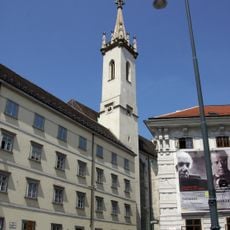
The heart crypt lies behind the Loreto Chapel, reached through the Augustinian Church; the chapel group adjoins the church to the south, next to the George Chapel. The crypt itself is a small chamber closed by an iron plate and a marble slab, so the hearts are not visible from the chapel floor. Look for the paving slab in front of the altar that marks the old burial chamber.
The chapel houses the hearts of more than 50 members of the imperial family, a collection of major historical importance in Europe. This unusual burial practice shows how the Habsburgs interwove religion and power.
The community of curious travelers
AroundUs brings together thousands of curated places, local tips, and hidden gems, enriched daily by 93,494 contributors worldwide.