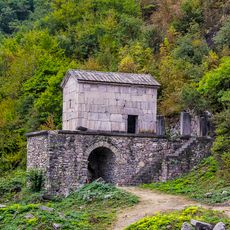
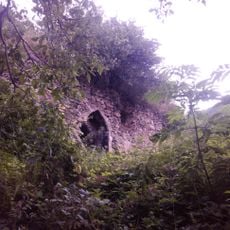
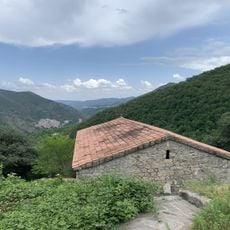
Mammadbayli Mausoleum, Medieval mausoleum in Məmmədbəyli village, Azerbaijan.
Mammadbayli Mausoleum is an octagonal prism of white hewn stone topped by an eight-sided pyramidal roof, built in 1305 by architect Ali Majd ad-Din. Its walls are 86 cm thick, with outer and inner rows of facing blocks filled with river cobbles and mortar. The northwest face holds the entrance, raised 1.8 m above ground and framed by two rows of prismatic stalactites; a black stone cornice runs below the roof.
The structure was built in 1305, during a period when the region was an important stop on the Silk Road trade routes. A sepulcher was discovered during excavations in 1975, confirming its original purpose as a burial site.
The entrance displays Arabic inscriptions from the Quran and names Yahya ibn Muhammad al-Haj as the person this religious monument was built for. These texts were meant to honor the deceased and guide prayers from those who visited.
The entrance is quite low and narrow, requiring visitors to bend down to enter, which was part of the original design based on Islamic guidelines. It helps to move slowly and carefully, especially if you are tall or have difficulty with physical movement.
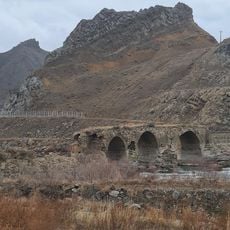
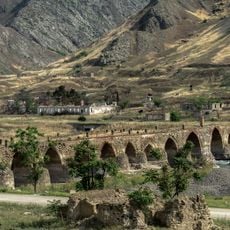
Local elders say a tunnel once linked the mausoleum to Sharifan village on the far bank of the Hakari River. The claim is unverified, but it points to the site's role in a network of Silk Road stops. The Arabic inscription above the door matches the caravanserai at Zangazur's Salim pass in size, shape and carving technique.
The community of curious travelers
AroundUs brings together thousands of curated places, local tips, and hidden gems, enriched daily by 93,808 contributors worldwide.