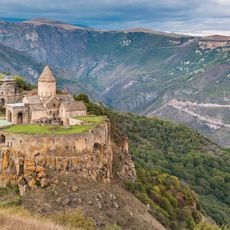
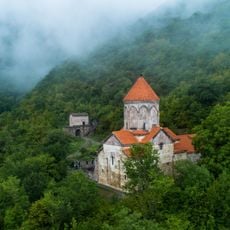
Halidzor Fortress, 17th-century fortress in Kapan, Armenia.
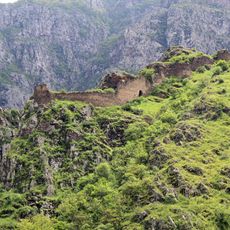
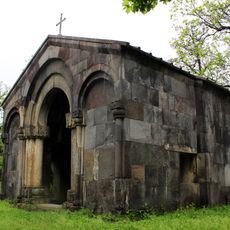
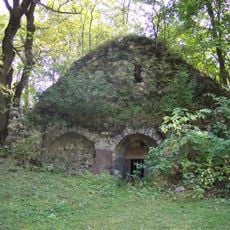
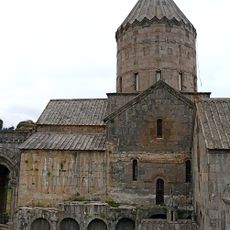
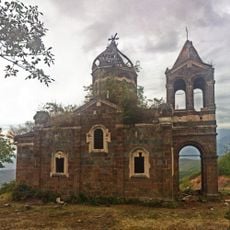
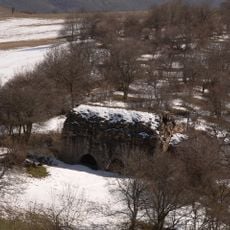
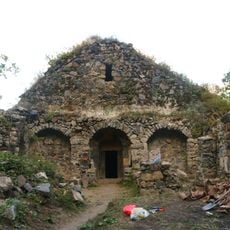
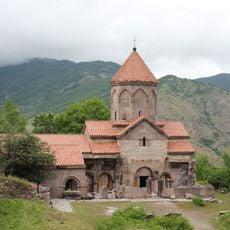
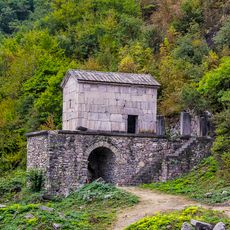
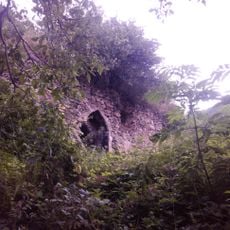
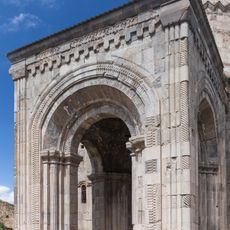
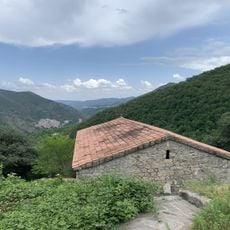
Halidzor Fortress sits on a hill at 1,051 metres above sea level, 1 km northeast of Kapan, above the Voghji River. Its walls form an irregular quadrangle with a round tower at the southwest corner and arched entrances to the north and south. Inside are the vaulted hall church of S. Minas with sacristies beside the apse, a chapel, and foundations of dwellings.
Halidzor was built in the first half of the 17th century as a nunnery of the Holy Mother of God. In the 18th century David Bek rebuilt it as a fortress, making it the main stronghold of his liberation struggle and the seat of the Armenian principality of Syunik. In 1728 Bek died here of illness; he is said to be buried in the cemetery outside the walls.
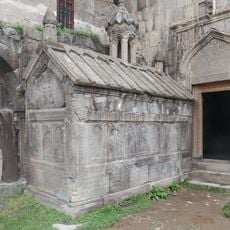
The site began as a nunnery, the Convent of the Holy Mother of God of Halidzor, before David Bek converted it into a fortress. Oral tradition tells that after Bek died here in 1728, an elderly bishop from Tatev held a large funeral service, and Bek is said to be buried in the cemetery just outside the walls, his tombstone marked by a single flower carved on its underside.
Halidzor Fortress lies on a hill 1,051 metres above sea level, about 1 kilometre northeast of Kapan, above the Voghji River. The site holds the ruined church of S. Minas, a chapel and dwelling foundations, with arched portals on the north and south sides. Restoration work carried out between 2006 and 2010 stabilised parts of the walls.
An underground tunnel once ran beneath the fortress to the nearby Voghji River, ensuring defenders had access to water during sieges. This hidden system reveals the sophistication of the fortress engineering and the planning needed to survive extreme pressure.
The community of curious travelers
AroundUs brings together thousands of curated places, local tips, and hidden gems, enriched daily by 93,000 contributors worldwide.