Bgheno-Noravank, Medieval monastery in Bardzravan, Armenia
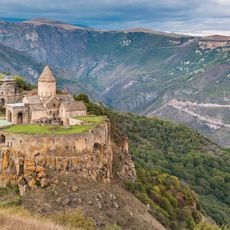
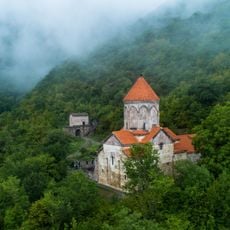
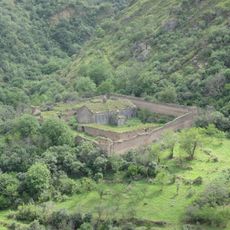
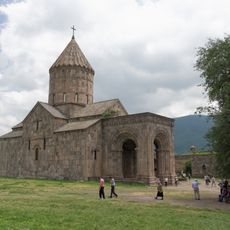
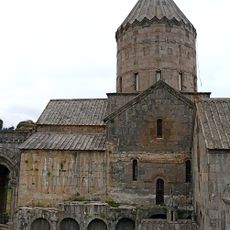
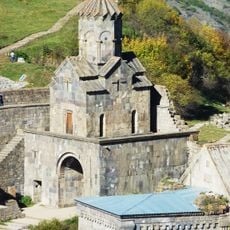
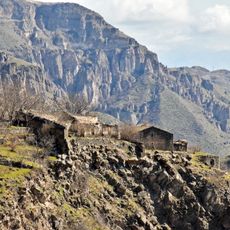
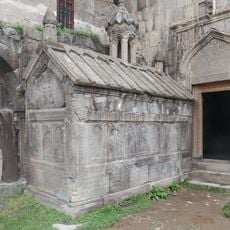
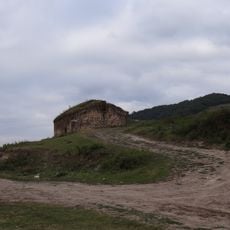
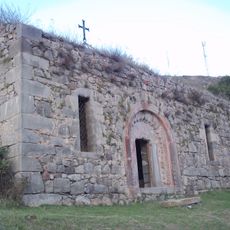
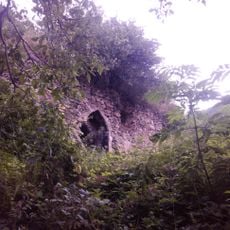
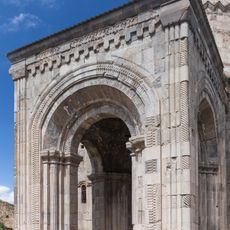
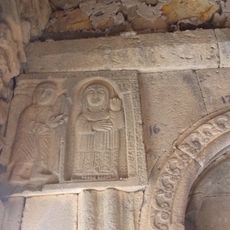
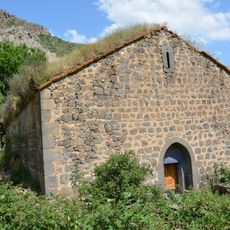
Bgheno-Noravank is a small monastery church of 1062 on a triangular promontory above wooded gorges, 3 km east of Bardzravan. Its plan combines a narrow central hall with side galleries under one tiled roof; the exterior measures about 9.5 m by 6 m. The west facade centers on a carved portal, and relief panels on cream-colored stone show scenes from the life of Christ.
According to Stepanos Orbelian, a priest named Stepanos built a first group of buildings here in 936 from whitish limestone, including a church, hall, gavit and a leprosarium. A second group was completed in 1062, when King Grigor I of Syunik had the crumbling church rebuilt in smooth bluish basalt. Axel Bakunts came upon the ruins in the 1920s while working as an agronomist.
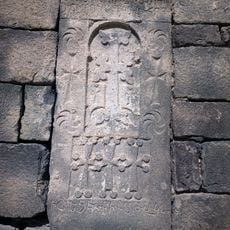
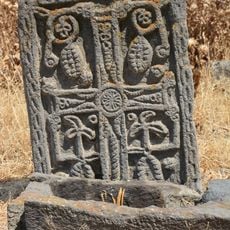
The church walls carry eight carved stone panels showing scenes from the life of Christ; two remain in place, the Annunciation and the Ascension, while the rest have fallen. Their style links them to the Tatev school of painting and manuscript illumination. The name Bgheno is popularly tied to the Armenian word for a leper colony, said to have stood opposite the monastery.
Access is via the road leading from Bardzravan toward Shurnukh, located about three kilometers east of the village. Visitors should be prepared for uneven pathways and natural surroundings, so appropriate footwear and time to explore are necessary.
The church's usable interior is only about 10 m², yet it has a large west entrance, four openings to the side halls, a mid-sized window in the apse and a small window above the main door. The low apse window was placed so that worshippers kept the surrounding wooded gorge in view during services.
The community of curious travelers
AroundUs brings together thousands of curated places, local tips, and hidden gems, enriched daily by 94,346 contributors worldwide.