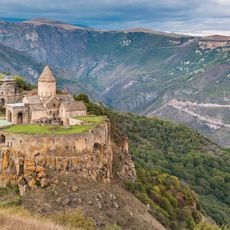
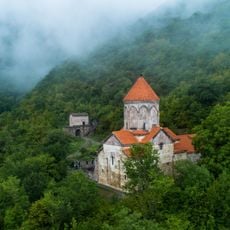
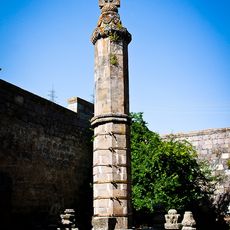
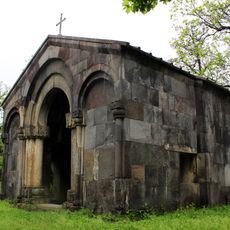
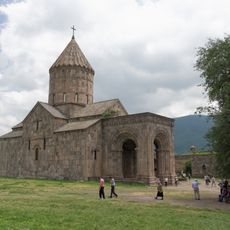
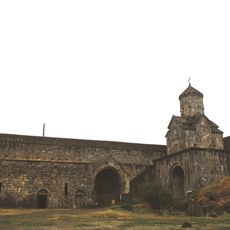
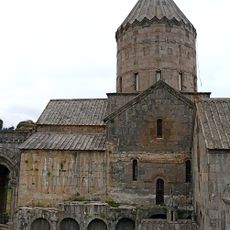
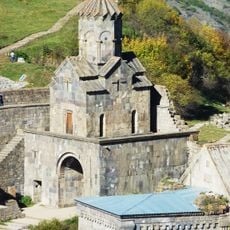
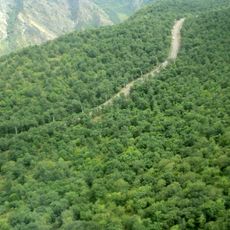
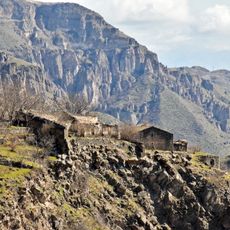
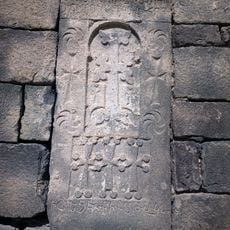
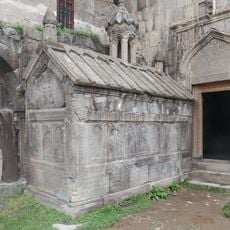
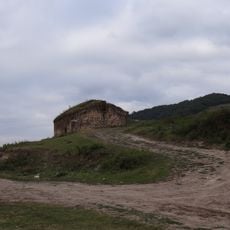
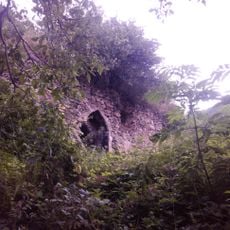
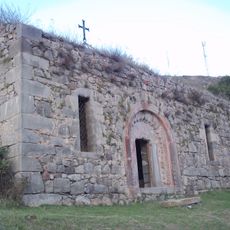
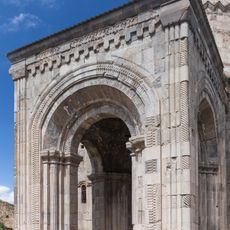
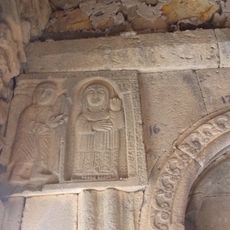
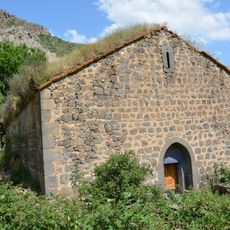
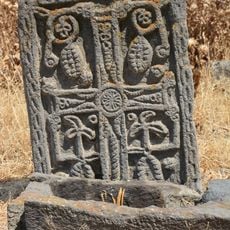
Tatevi Anapat, 17th-century monastery in Syunik Province, Armenia.
Tatevi Anapat is a 17th-century monastery standing on a basalt plateau above the Vorotan river valley with traditional Armenian stone architecture. The complex features rectangular defensive walls with corner towers and multiple structures arranged to create a self-contained religious compound.
Construction began in the 1660s following an earthquake that destroyed a nearby hermitage in the region. The monastery was established as a replacement religious center to serve the community in this mountainous area.
The monastery's Armenian name, Tatevi Mets Anapat, means Great Hermitage of Tatev. According to tradition, the earlier Arants hermitage was destroyed by three successive earthquakes; all the monks survived except an elder who refused to leave and died in the third. A legend also holds that an underground passage linked the hermitage to the upper Tatev Monastery.
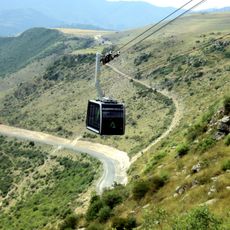
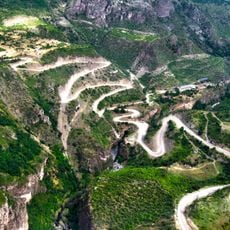
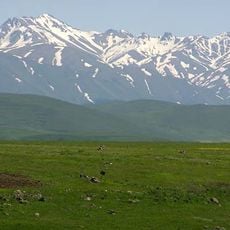
The monastery sits in a mountainous setting that requires careful planning to visit, as access comes through the nearby village of Tatev. Late spring through early fall offers the best conditions for the journey, with more stable weather and easier travel to the site.
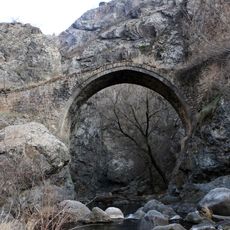
An underground passage once linked the hermitage with the upper Tatev Monastery on the plateau above. Near the site stands the Satan's Bridge (Satani Kamurj), where bathers use the mineral springs by the Vorotan. Russian sources also record that three successive earthquakes destroyed the earlier Arants hermitage, killing only one elder who refused to leave.
The community of curious travelers
AroundUs brings together thousands of curated places, local tips, and hidden gems, enriched daily by 92,789 contributors worldwide.