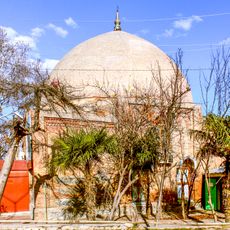
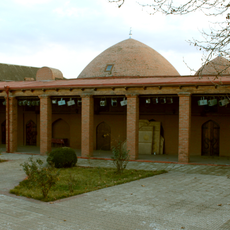
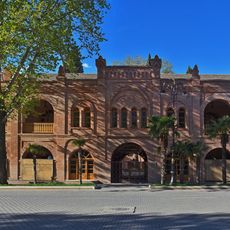
Nizami Mausoleum, Cultural monument in Ganja, Azerbaijan.
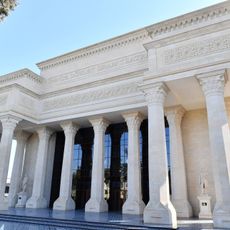
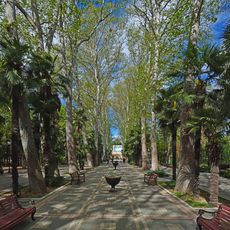
The Nizami Mausoleum is an octagonal marble structure about 20 meters tall, located just outside Ganja amid a park. Its red granite blocks were brought from Ukraine, and the design was led by architect Farman Imamguliyev with sculptures by Gorkhmaz Sudaddinov. Bronze monuments nearby depict scenes from Nizami's epics.
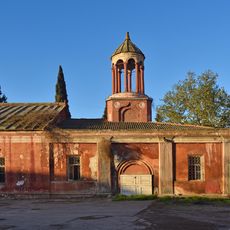
The first written record of the tomb dates from 1606, when Shah Abbas I camped beside it and celebrated Nowruz there on 24 March. The shrine collapsed by the 1840s and was rebuilt by Mirza Adigozal bey; in 1826 the battle of Elisavetpol was fought nearby. A limestone mausoleum replaced it in 1947, was damaged by waste from a nearby Soviet aluminium plant, and was rebuilt in its present form in 1991.
Nizami Ganjavi's tomb was a pilgrimage site for his followers for centuries. In 1997 Persian tile inscriptions of his verses were placed on the mausoleum; in the 2010s they were removed and replaced with Azerbaijani Turkish translations, prompting Iran to protest to UNESCO. Bronze monuments near the tomb depict scenes from his epics.
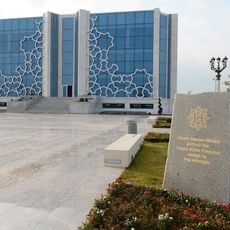
The mausoleum stands outside Ganja, not in the city centre, so plan a short trip from town rather than a walk. The site is a tall cylindrical marble structure about 20 m high in a surrounding park, with a bronze monument to the poet's works nearby and the Nizami Ganjavi Museum in front of it.
Excavations in 1940, ahead of the new tomb, uncovered 13th-century graves and the foundations of an older brick mausoleum, including glazed tiles in blue, green and dark brown. Some curved tiles show that its dome was once decorated with coloured glazing.
The community of curious travelers
AroundUs brings together thousands of curated places, local tips, and hidden gems, enriched daily by 93,389 contributors worldwide.