Gates of Ganja, Medieval door at Gelati Monastery, Georgia
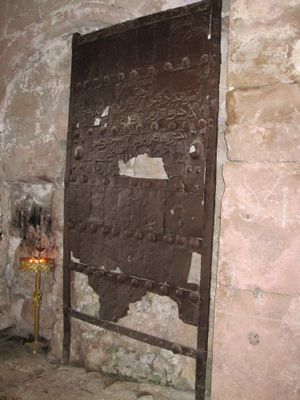
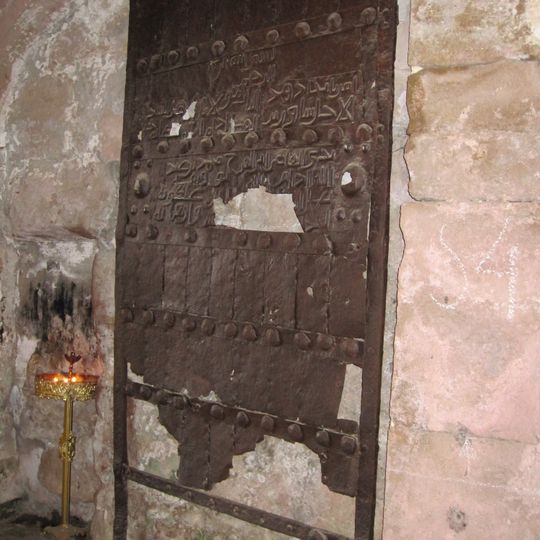
The Gates of Ganja is a medieval cast iron door now set into the wall of Gelati Monastery in Georgia. Only one half of the original door survives, and it is covered with stamped patterns and ornaments made through careful metalworking.
The gate originally came from the city of Ganja in Azerbaijan, and King Demetrius I brought it to Georgia in 1139 after an earthquake struck the city. It had been made for the Shaddadids, a medieval Islamic dynasty that ruled in that region.
The gate carries Kufi inscriptions in Arabic that praise Allah and name Sayyid Shawur ibn Al-Fazl as the man who commissioned it. These inscriptions show how closely the Caucasus region was connected to the medieval Islamic world.
The gate is set into the wall of Gelati Monastery and is easy to spot, as it sits directly across from the tomb of King David IV. It is best seen up close, so taking a moment to stop and look at the surface details is worthwhile.
This door was one of six city gates that protected Ganja, and it served as the main entrance to the city. It is the only one of the six that has survived, which makes it the sole remaining piece of that original set.
The community of curious travelers
AroundUs brings together thousands of curated places, local tips, and hidden gems, enriched daily by 91,266 contributors worldwide.