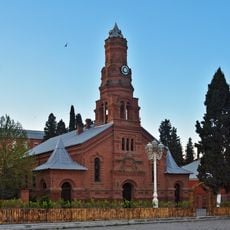
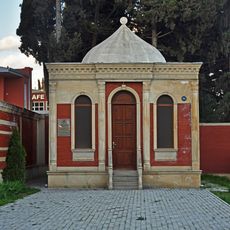
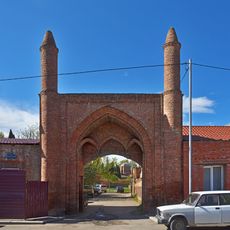
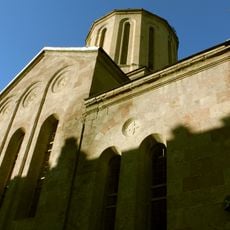
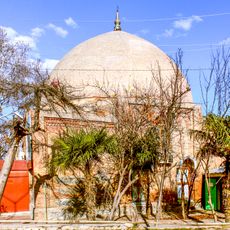
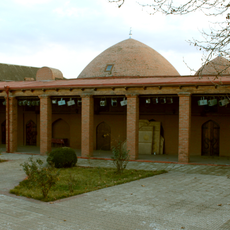
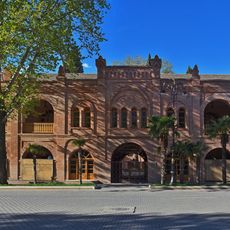
Imamzadeh Mausoleum, Islamic mausoleum in Ganja, Azerbaijan.
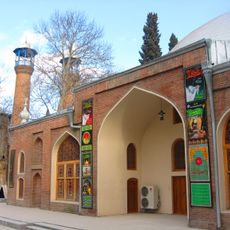
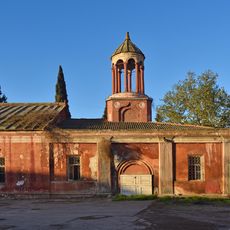
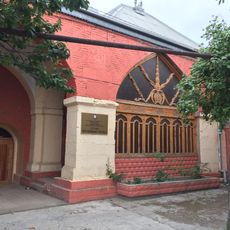
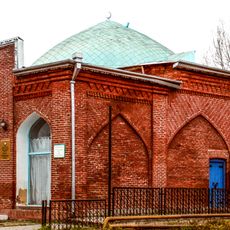
The Imamzadeh Mausoleum is an Islamic shrine in Ganja featuring a prominent central dome covered in bright blue tiles and surrounded by multiple connected structures. The complex includes prayer halls, courtyards, and architectural elements that form a complete religious compound.
The site was established in the 8th century as the burial place of Ibrahim, son of Imam Muhammad al-Baqir, who sought refuge in Azerbaijan to escape persecution. Over the centuries, it evolved into a pilgrimage destination that remains important to the region.
The mausoleum is a pilgrimage site that grew from a medieval waqf: a 1593 register of the Ganja-Karabakh province lists the Imamzadeh waqf with an annual income of 5,308 akçe, spent on food, guardianship, sacrifice, tomb-keeping, collection and carpeting for those in need. The complex also holds the Goy Imam Mosque, built over the tomb, whose central dome is decorated with floral motifs and peacock figures.
The renovated grounds provide clearly arranged prayer halls and visitor areas for those wishing to enter. Visitors should dress appropriately and respect the guidelines of the site, as it remains an active religious center.
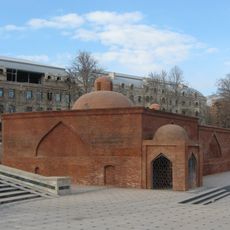
The complex has nine domes in all: the main dome over the tomb, seven smaller domes around it, and a ninth above the entrance gate. The two small domed cells flanking the central dome were added later, probably in the 13th–14th centuries, and each holds a fine mihrab faced with white and blue glazed tile.
The community of curious travelers
AroundUs brings together thousands of curated places, local tips, and hidden gems, enriched daily by 93,367 contributors worldwide.