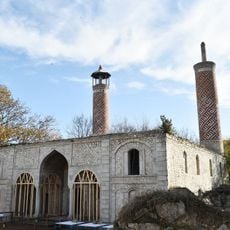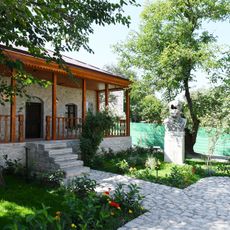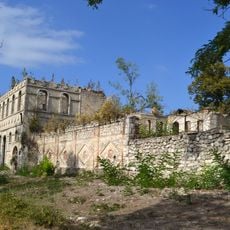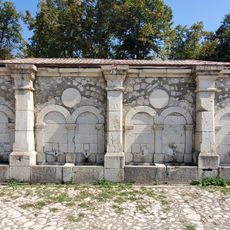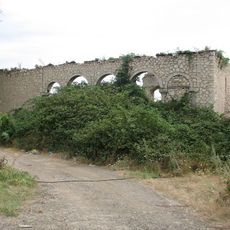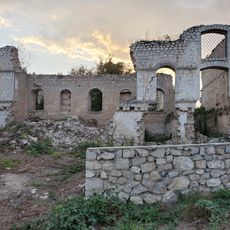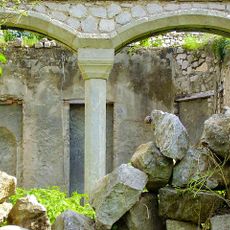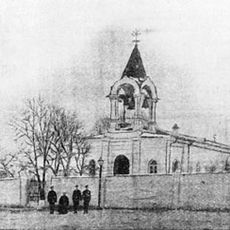
Ganja Gate, Medieval fortress gate in Shusha, Azerbaijan.
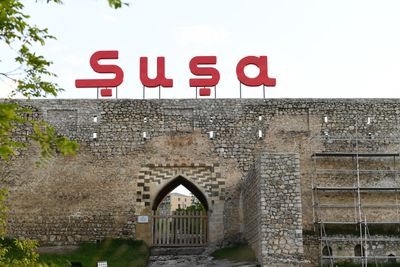
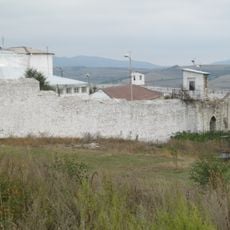
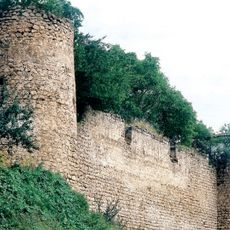
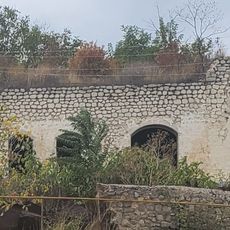
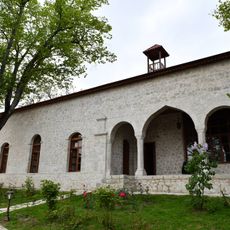
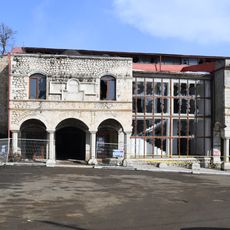
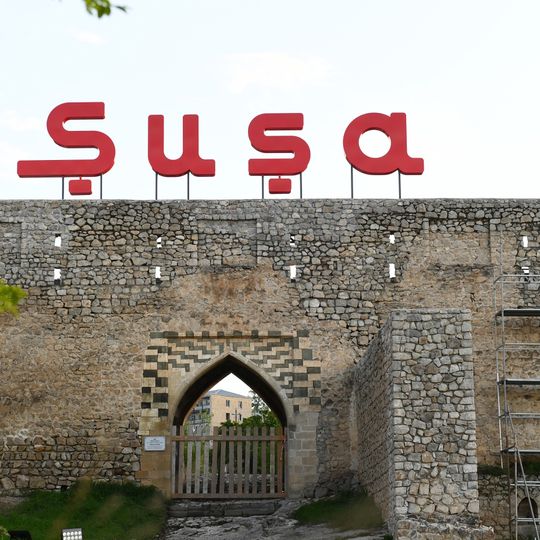
The Ganja Gate is the northern entrance of Shusha Fortress, featuring a stone arch with black and white masonry arranged in a checkerboard pattern around the opening. The structure combines carefully placed stones to create a distinctive gateway, positioned alongside other fortress entrances in an organized layout.
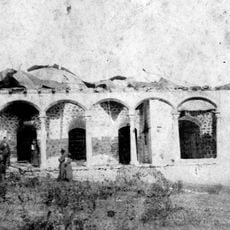
The gate was built in 1750 under Panahali Khan's leadership and was renamed Elizavetpol Gate after the Russian Empire annexed the Karabakh Khanate in 1805. This name change reflected the shift in political control that reshaped the gate's role and meaning for the city.
This gate displays features of the Arran Architectural School, showing local building techniques and design elements from the Karabakh Khanate period. Visitors can observe the regional construction tradition reflected in how the stones were carefully placed and organized.
The gate is located between Aghoghlan Gate and Irevan Gate and originally served as the main passage for carts and trade traffic. Its position helps visitors understand the fortress gate layout and explore the route that once connected Shusha to the city of Ganja.
The gate features window openings and loopholes built into its walls, showing how defensive structures were designed in the 18th century. These practical features allowed defenders to watch the surroundings and respond to threats without leaving the gate wall.
The community of curious travelers
AroundUs brings together thousands of curated places, local tips, and hidden gems, enriched daily by 91,654 contributors worldwide.