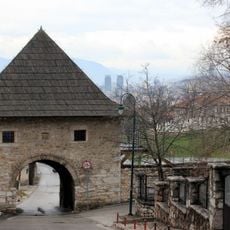
Goat's Bridge, Ottoman stone bridge in Stari Grad, Bosnia and Herzegovina.
Goat's Bridge, also known as Kozija ćuprija, is an Ottoman stone arch bridge over the Miljacka River in the Stari Grad municipality of Sarajevo, Bosnia and Herzegovina. It is built of hreša, a white marble, and has one main arch with a span of 17.5 metres plus two circular openings. The bridge is 42 metres long and 4.75 metres wide.
The bridge is thought to date from the road-building campaign of Grand Vizier Mehmed-paša Sokolović (1565–1579), the era that also produced the Arslanagić Bridge, the Old Bridge in Mostar and the Drina bridge at Višegrad. The oldest written record is Mula Mustafa Bašeškija's 1771 note of a stone wall running from Kozija Ćuprija to Alifakovac. In 2004 the Commission to Preserve National Monuments declared it a National Monument of Bosnia and Herzegovina.
The name Kozija ćuprija, "Goat's Bridge", comes from a folk legend: a poor goatherd found a pot of gold coins under a bush where his goats lingered, paid for his education, and later built the bridge at that spot. In Ottoman times, new viziers were received on the bridge, and young men jumped into the shallow Miljacka below to be rewarded with money.
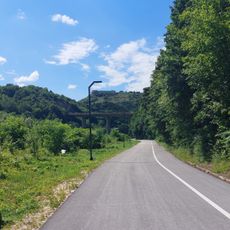
The bridge is within walking distance from the old town, and the most pleasant way to reach it is along the riverside path. The area has few facilities, so it is a good idea to bring water, especially in warmer months.
When important officials arrived in the city, young men would jump from the bridge into the river below as a show of courage, a local custom with no official standing. This gesture was entirely voluntary and driven by community pride rather than any formal tradition.
The community of curious travelers
AroundUs brings together thousands of curated places, local tips, and hidden gems, enriched daily by 93,365 contributors worldwide.