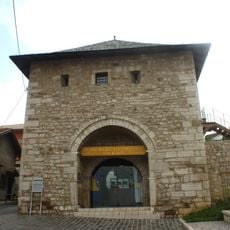
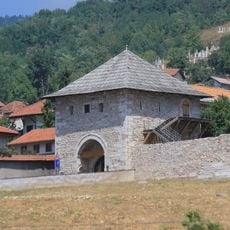
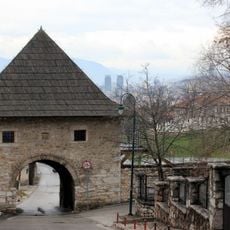
Žuta Tabija, Ottoman cannon fortress in Stari Grad, Bosnia and Herzegovina.
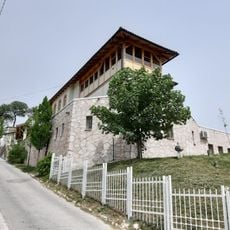
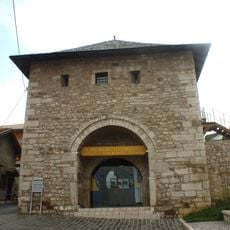
Žuta Tabija is a fortress with sandstone walls that reach varying heights, with some sections soaring to 27 meters at their highest point. The structure sits at the entrance to Vratnik and commands views across the neighborhood from its elevated position.
Construction of this fortification took place between 1727 and 1739 under Governor Gazi Ahmed Pasha's orders as a response to military threats. The fortress became part of the city's defensive strategy during this period of Ottoman rule.
The name Yellow Bastion comes from the colour of the stone used to build it, originally called Jekovački Bastion. After 1878, Austro-Hungarian troops used the site but allowed Muslims to keep firing the cannon to mark the end of Ramadan, a practice still observed today.
The site is easily reached on foot and is best visited on clear days when views across the city are at their best. Wear sturdy shoes as access involves uneven terrain and steep pathways around the structure.
The bastion was originally called Jekovački Bastion, after the Jekovac cliff it stands on; residents renamed it Yellow Bastion for the colour of the stone. Its outer sides measure 10 metres high across seven faces, with an eighth face to the north at 27.5 metres, and the walls are 35 centimetres thick. It was declared a National Monument of Bosnia and Herzegovina in 2005.
The community of curious travelers
AroundUs brings together thousands of curated places, local tips, and hidden gems, enriched daily by 94,365 contributors worldwide.