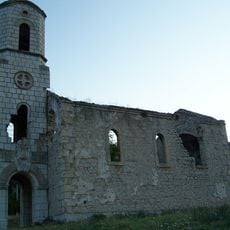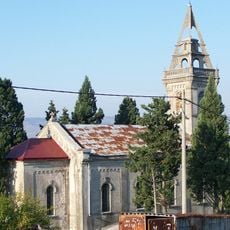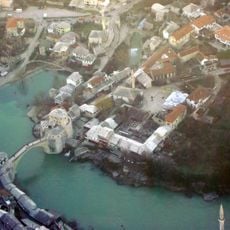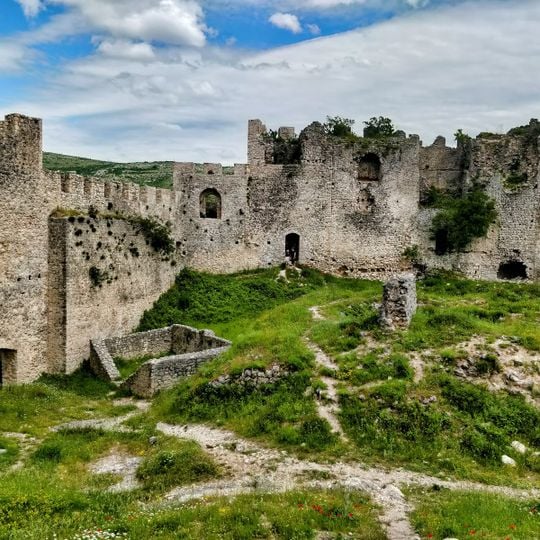
Blagaj Fortress, Medieval fortress ruins in Blagaj, Bosnia and Herzegovina
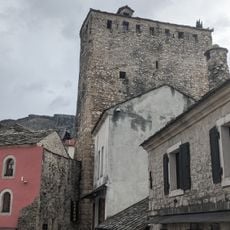
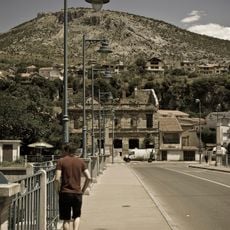
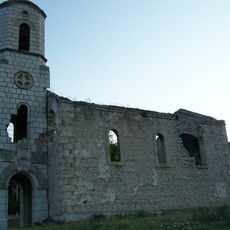
Blagaj Fortress is a medieval castle ruin perched on a limestone hill in the valley near Mostar, with walls that follow the natural contours of the terrain. The structure adapts to the steep slopes and cliff faces, creating an irregular boundary rather than a regular layout.
Illyrian Daorsi built a fort above the Buna spring; Romans later added a castrum, and by the 10th century a town had grown on the ruins as the centre of Hum. In May 1404 Duke Sandalj Hranić made Blagaj his residence, and it later passed to Herceg Stjepan Vukčić Kosača, after whom it is called Stjepan-grad. The Ottomans took it in 1465, repaired the west tower in 1699 and the fort again in 1827; a garrison stayed until 1835, after a 1827 earthquake had damaged the foundations.
Locals call the fortress Stjepan-grad, after Herzog Stjepan Vukčić Kosača, who resided here in the 15th century. The name Bona appears in Constantine Porphyrogenitus's 10th-century treatise on the Zahumlje forts. A Cyrillic plaque found in 1912 near Bišće records Prince Miroslav's church of Saints Cosmas and Damian and is kept in the National Museum of Bosnia and Herzegovina.
The site sits on a hillside with steep climbing required to reach the top, so wear sturdy shoes and allow extra time for the ascent. The exposed location means you will feel wind and sun quite strongly, so bring sun protection and water.
Excavations have revealed that layers of human settlement lie beneath the medieval walls, reaching back to prehistoric and Roman times. Visitors can observe these different periods visible in the soil and stone at the highest points of the site.
The community of curious travelers
AroundUs brings together thousands of curated places, local tips, and hidden gems, enriched daily by 94,512 contributors worldwide.